


EU–Canada summit: Progress made, but deeper integration cannot wait
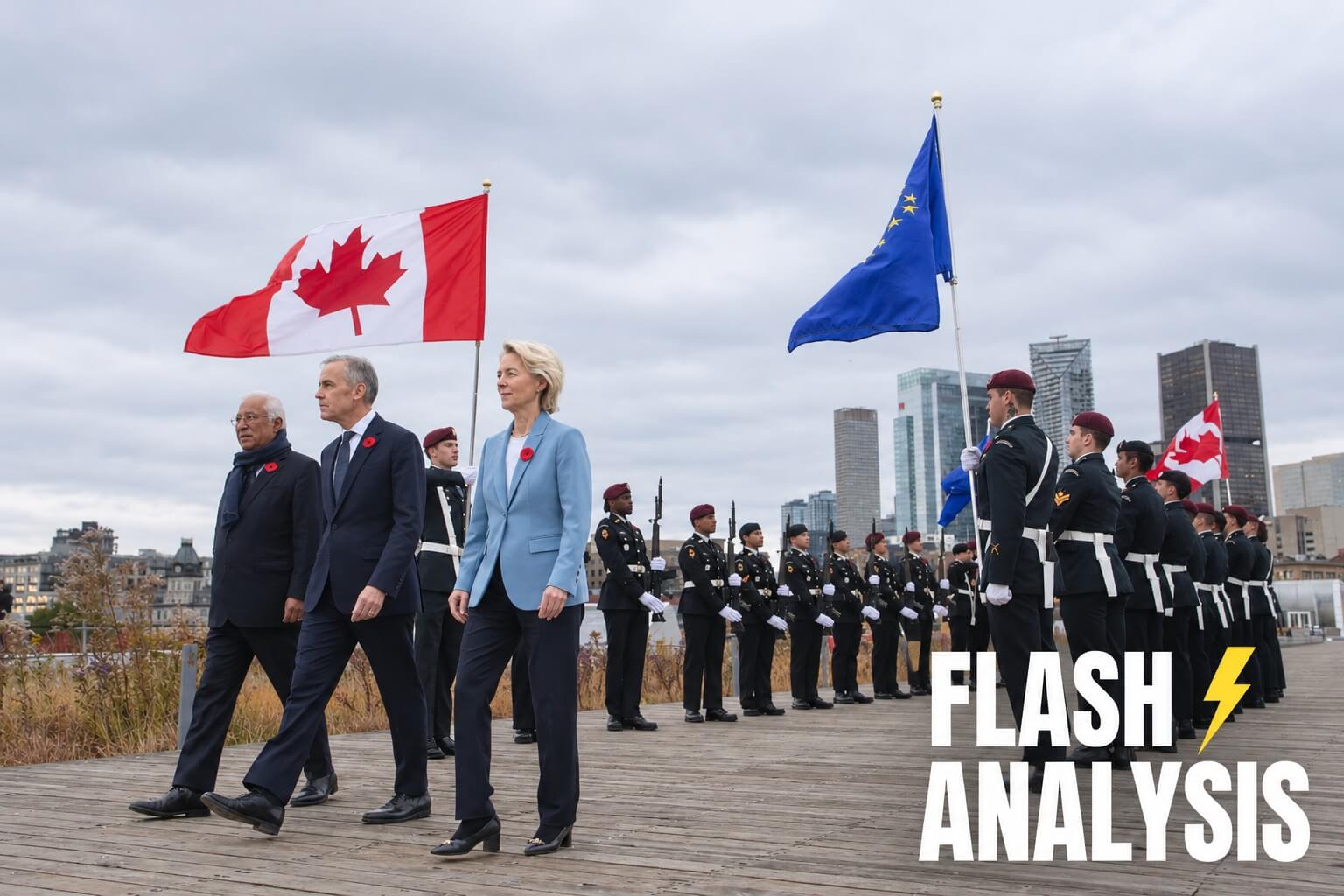

The EU–Canada summit in Montreal on 29–30 October provided fresh momentum for deeper integration. Leaders launched an Alliance for the Future and committed to defining an ever-closer association by their next summit in 2027, short of full EU membership. Yet, given the scale of today's challenges, the summit offered a broad promise of deeper integration without clearly defining what it should entail or how to achieve it.
Montreal nevertheless delivered tangible progress. Building on Canada's existing participation in EU initiatives such as Horizon Europe, PESCO and SAFE, the summit brought Canada into the EU's supercomputing initiative, concluded negotiations on a Digital Trade Agreement and established an EIB framework for investment in Canadian critical minerals. Leaders also agreed to develop industrial roadmaps for strategic sectors, pursue closer regulatory alignment, strengthen critical infrastructure through secure subsea cables and satellite connectivity, and establish a framework to protect democratic processes against foreign interference.
Nevertheless, much remains aspirational. Many of these initiatives still lack concrete implementation plans, binding investment commitments and clear timelines. More fundamentally, the substance of an ever-closer association remains undefined, with leaders committing to develop a concept only by their next summit in 2027. As the EPC warned ahead of the summit, announcements risk being mistaken for achievements.
Three priorities should now turn ambitions into concrete outcomes:
First, define the institutional architecture before political circumstances change. The EU and Canada should agree on the substance of closer association before France's presidential election in April–May 2027. The possibility of a Marine Le Pen presidency underlines the urgency of establishing durable arrangements. The framework should specify Canada's access to selected parts of the Single Market and EU programmes, prioritising areas of greatest mutual benefit, particularly related to competitiveness, economic security and defence. It should also define the corresponding regulatory obligations, financial contributions, and decision-making structures and provide for closer coordination in foreign policy. The long-term ambition should be EU membership in all but name.
Second, integrate industrial policies and mobilise investment. Building on the summit's industrial dialogue, EuroHPC cooperation and EIB agreement, both sides should pursue reciprocal access to selected subsidies and procurement markets, coordinate industrial support, and jointly invest in strategic technologies. Cross-border industrial alliances could pool investment, aggregate demand and coordinate production in areas such as critical minerals, AI and defence. The planned EU–Canada Business Council should help translate these opportunities into concrete projects with private-sector participation.
Third, turn economic-security commitments into operational coordination. Building on the existing Economic Security Dialogue and the summit's commitments on reciprocity and supply-chain protection, the partners should establish concrete mechanisms to coordinate investment screening, export controls and trade-defence measures, including against circumvention and technology leakage. Agreed initiatives on critical infrastructure protection and democratic resilience should be translated into joint projects, information-sharing arrangements and clear implementation timelines.
Success would also have implications beyond Canada. This new form of integration could provide a precedent for closer EU association with other like-minded democracies, including Japan, South Korea and Australia. Its economic-security arrangements could eventually provide a test case and building block for an Economic Security Alliance involving a wider group of like-minded countries.
Montreal has opened the door to a new model of integration. The challenge now is to turn this political opportunity into durable institutional and economic realities.
The support the European Policy Centre receives for its ongoing operations, or specifically for its publications, does not constitute an endorsement of their contents, which reflect the views of the authors only. Supporters and partners cannot be held responsible for any use that may be made of the information contained therein.

