

Who gets to suspend Montenegro’s vote?
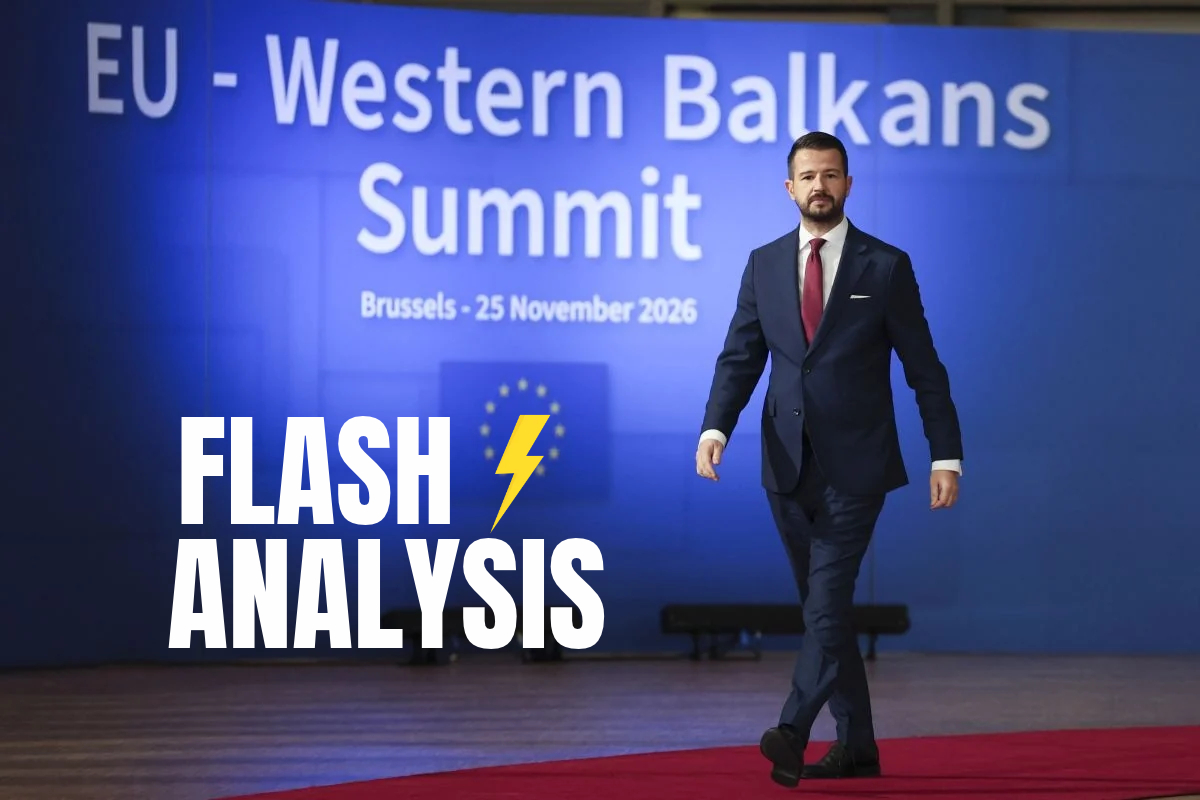

As EU leaders welcomed Montenegro’s progress towards membership in Brussels on 25 November, a dispute over the terms on which it would join came into view. At stake is a safeguard that could, in the most serious cases, suspend a new member’s voting rights in the Council.
Member states have broadly agreed that the safeguard should be available for 10 years after accession, extendable by five. The dispute is over who must assemble a qualified majority. The Irish presidency wants a qualified majority of member states to approve any action. The Commission’s draft safeguards for Montenegro’s accession treaty, discussed by national representatives on 24 November, would let its proposal stand unless a qualified majority blocks it. When governments are divided, that difference decides the outcome.
Under Article 7, the European Council must first determine unanimously, without the state concerned, that a serious and persistent breach of EU values has occurred. Only then can the Council suspend voting rights by qualified majority. The Commission’s proposal would give the EU a much easier route to the same sanction for a new member. As I argued in October, the same obligations would then be enforced at two different levels. The Commission’s draft widens that gap.
The triggers deserve the same scrutiny. The safeguard would cover serious breaches of EU values and of the principle of sincere cooperation, which some member states consider too hard to assess objectively. A breach of sincere cooperation would not, by itself, establish the serious and persistent breach of EU values that Article 7 requires. So the safeguard raises two questions: how easily a new member could lose its vote, and for what conduct. When does a government exercising its veto cross the line into a breach of sincere cooperation, and who gets to decide? The EU’s experience with an existing member is clearly shaping the answer. Applying that lesson only to newcomers treats a weakness of the system as a risk imported from outside.
None of this is an argument against safeguards. A larger Union needs protection against democratic backsliding. But the member states are defining this one among themselves. It deserves a debate at leaders’ level, with the region at the table, and a parallel effort to make Article 7 work for everyone, so that the safeguard is a bridge rather than a permanent double standard.
Before asking Montenegro to accept this clause, the 27 should explain why the threshold for suspending a member’s vote should depend on when it joined.
Corina Stratulat is Associate Director and Head of the European Politics and Institutions Programme.
The support the European Policy Centre receives for its ongoing operations, or specifically for its publications, does not constitute an endorsement of their contents, which reflect the views of the authors only. Supporters and partners cannot be held responsible for any use that may be made of the information contained therein.