


The future of EU economic security lies beyond the G7
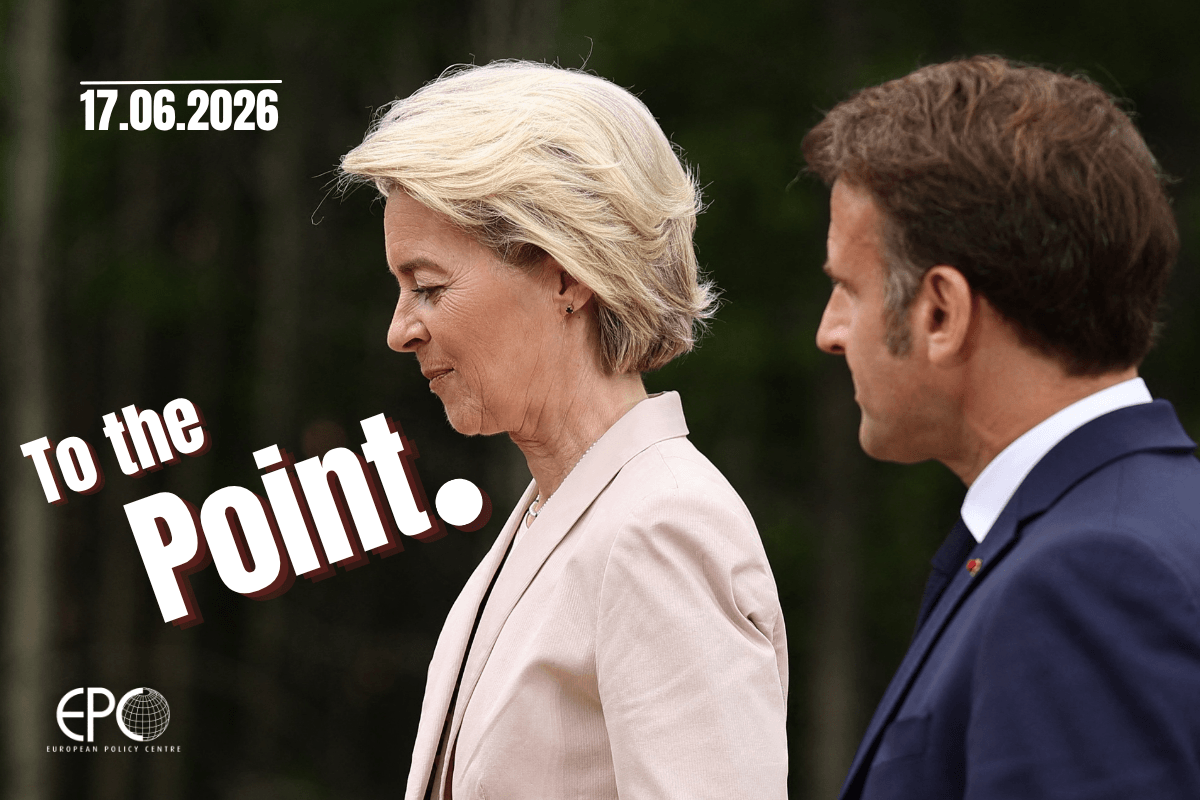

Economic security has been at the heart of the French G7 presidency’s agenda, “reducing macroeconomic imbalances”, “strengthening economic security,” and addressing Chinese overcapacity, were identified as key priorities for action.
Previous summits, including Japan’s in Hiroshima, have already progressively elevated economic security into a central pillar of the G7. However, the Trump administration’s threats to G7 allies and its unilateral approach to trade, technology and industry have undermined the G7’s effectiveness as a vehicle for economic-security cooperation.
The Évian summit nevertheless sent some encouraging signals, including a more cooperative US stance on Ukraine and commitments to strengthen cooperation on critical minerals. However, G-7 leaders have yet to agree a common stance on Chinese overcapacity.
EU G7 members should continue to pursue alignment on industrial, technology and trade policy. But if the EU is to strengthen its economic security through partnerships, it will need to rely on a diversified, multilayered network of alliances, with the G7 forming only one element of a broader strategy.
The broader, US led Pax Silica, which the EU is set to join, may prove a more effective platform for coordinating export controls and technology-security policies vis-à-vis China.
To strengthen supply chain resilience, the EU should strengthen industrial and technological partnerships with like-minded middle powers such as Japan, South Korea, Australia, the UK and Canada, with the aim of building a new geo-industrial deal.
To counter Chinese overcapacity, a much broader alliance should be sought that includes other trade blocs like the CPTPP, middle powers like Turkey and BRICS states like India and Brazil, some of which have already acted more robustly on China than the EU.
Philipp Lausberg is a Senior Policy Analyst in the European Political Economy Programme at the European Policy Centre and leads the EPC’s EU sanctions project.
The support the European Policy Centre receives for its ongoing operations, or specifically for its publications, does not constitute an endorsement of their contents, which reflect the views of the authors only. Supporters and partners cannot be held responsible for any use that may be made of the information contained therein.

