
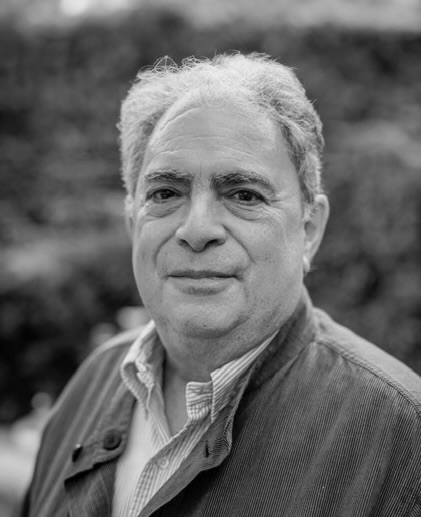
Paul Taylor is a Senior Visiting Fellow in the Europe in the World Programme and a member of the Defence/Security EUrope project. He is also a freelance columnist for The Guardian.
He worked for nearly 40 years for Reuters, the international news agency, as a foreign correspondent, bureau chief and editor in Europe and the Middle East. He was based in London, Paris, Tehran, Bonn, Brussels, Jerusalem, Berlin and Cairo. He specialised in transatlantic diplomacy and defence as NATO correspondent (1983-86), Diplomatic Editor (1997-2001) and European Affairs Editor, (2001-2016).
Prior to joining the EPC, he was a senior fellow in the Peace, Security and Defence programme of Friends of Europe, where he published a dozen studies on different aspects of European defence cooperation. He was also a columnist on European affairs for POLITICO and the New York Times/International Herald Tribune.
He has an MA in Modern History and Modern Languages from Balliol College, Oxford University, and speaks fluent English, French and German. A dual French and UK national, he is based in France.
PROGRAMME
PROJECTS
AREAS OF EXPERTISE
EU politics, NATO, transatlantic relations, security in the Mediterranean, Black Sea, Arctic, Sahel, nuclear deterrence
The race to succeed Emmanuel Macron is looming, but rarely has the mood been so gloomy or the lure of extremist solutions so alarming
The migrant influx prompted recriminations and a tit-for-tat dispute between Italy and Spain. Putin, Erdoğan and others will have taken note
But why the frenzy among European governments? Paul Taylor, a senior fellow with the European Policy Centre, says there was a shamelessly cynical interest for some EU leaders to pile on and isolate Madrid. The reaction was very different in the past, when Poland and Lithuania faced migrant incursions weaponised by Belarus.
“Most EU governments are conservative or rightwing-led and have an interest in scapegoating Spain, which is governed by a socialist-leftist coalition, and in helping Spain’s rightwing opposition ahead of a general election due next year, and in trying to win back voters in their own countries who are defecting to rightwing populists,” Taylor said.
Within the EU, Sanchez has swum against the tide, standing up to the Trump administration over Gaza, the war in Iran and Nato defence spending. During the recent wildfires he was vocal about climate backsliding. In an EU where policy has been hardening since 2015, he bucks the trend on migration, too.
“Spain has been an outlier, welcoming migration and actively working to integrate migrants into the economy and society,” Taylor said. “This is seen as an affront by many conservative politicians but also as a ‘pull factor’ encouraging would-be migrants to try their luck in Europe at a time when official EU policy is to combat irregular migration, crack down on abuses of the asylum system and park asylum seekers offshore in countries outside the bloc.”
And this is exactly the bigger political bone Meloni, Frederiksen and others wanted to pick with Spain. In their letter to the EU, ostensibly about the immediate crisis in Ceuta, they targeted Madrid’s recent policy of allowing undocumented people working in mainland Spain to regularise their migration status, even though this was irrelevant for those involved in the Ceuta situation.
What is most striking about this, Taylor said, is the hypocrisy and double standards of Spain’s critics.
“Many of those criticising Spain’s amnesty allowing irregular migrants to apply for residence permits have introduced similar schemes in their own countries. Italy and Germany have both given work permits and/or the right to remain to irregular migrants already working there in programmes supported by employers plagued by labour shortages.”
The new PM’s priorities are domestic, but he will soon realise that closer engagement with the EU is a no-brainer
As the US president swung between threats to take Greenland and promises of help for Ukraine, pledges of a ‘stronger Nato’ were lost in the wind
Paul Taylor was quoted in an article published by Anadolu, a Turkish news agency on transatlantic security burden-shifting, European strategic autonomy and Turkey’s security role in their roundup ahead of next week’s Ankara NATO summit.
Paul Taylor was on Turkish public television TRT World’s Roundtable talk-show last week on the UK defence secretary’s resignation, defence spending and the NATO targets.
“There is an enduring mismatch between the UK wanting to exert leadership in NATO on defense” and its available resources, Paul Taylor, a senior fellow at the European Policy Centre, told Breaking Defense.
Paul Taylor spoke at an event organised by Euroactiv, on how European manufacturing can remain globally competitive.
Paul Taylor, a senior visiting fellow at Brussels’s European Policy Centre think tank, agrees that “the overwhelming preference of European governments right now is to do things within Nato’s command structures”.
He does believe, though, that Nato could be “Europeanised” – at least for conventional forces – via a gradual transfer of responsibility from the US. But there’s still the question of who would assume the role of Supreme Allied Commander Europe, a role traditionally held by an American.
“There’s always this difficulty of Europeans’ reluctance to serve under other Europeans,” he says. “How keen will Poles or the French be to serve under, say, a German supreme commander? That problem’s always been avoided by the fact that Nato has an American in overall charge.”
Even as the first Western journalist to interview Ayatollah Khomeini, I had no inkling of what was to come. Perhaps we should have learned from history
Joining Juliet Mann on The Agenda this week are Douglas Yates, Professor of International Relations at the American Graduate School in Paris, Paul Taylor, senior visiting fellow at the European Policy Centre and Renaud Foucart, Senior Lecturer in Economics at Lancaster University to discuss France’s government crisis and the implications for President Macron and for Europe
Can a European-led coalition really provide credible security guarantees? Past examples are not encouraging
The US president humiliated Ursula von der Leyen at his Scottish resort – but she still has no certainty on tariffs
This small cutback is hardly a draconian austerity purge for a country that is broke. But the howls of outrage show a rational debate is unlikely
European Nato members are acting on a new urgency to raise defence spending
The French leader will never agree to special EU concessions for the UK despite its strategic importance to Europe
As the Trump administration’s security focus shifts towards countering China, European governments are living on borrowed time
Amid geopolitical storms and the rise of populism, the ‘Nordic-Baltic eight’ is gaining clout as a bulwark of western resolve
Paul Taylor: I recognize the growth success of Greece, the sound public finances that the government has maintained. But I look at other factors that haven't changed so much.
The public finances look strong and new construction signals rebirth – or the hubris that heralds yet another collapse
The public finances look strong and new construction signals rebirth – or the hubris that heralds yet another collapse
A new pact could be the first step towards extending France’s nuclear shield over central Europe
The EU, the world’s biggest single market, can reposition itself and become less reliant on exporting goods to the US and China
With the US threatening unilateral withdrawal, even from the top Nato military post, five European nations must fill the vacuum
Washington wants the Ukraine president’s scalp – so Kyiv has no choice but to ignore Keir Starmer’s bad advice
"Europe needs German leadership to save Nato and the EU"
By centring the discourse on immigration, MPs have handed support to the far right – and hidden a ticking economic timebomb from voters
The continent must act urgently to boost its defenses or face the consequences of Russia’s continued belligerence.
Europe may have as little as three to five years to prepare for a potential Russian attack – it must get real about borrowing to protect peace
If the Turkish strongman clashes with Israel over Syria he will be blamed for wrecking Trump’s plans to pacify and disengage from the region
The far-right leader leaves behind a less welcoming, less tolerant France – that is perhaps ready to elect Marine Le Pen as president

