


In a world of disorder, the ability to cooperate is a hard currency. Most countries around the world have no desire to become victims of unrestrained global plundering. Europe is the world champion of cooperation – including when it comes to failing at it. Europe must now quickly deploy its collaborative agency in more unconventional and flexible ways.
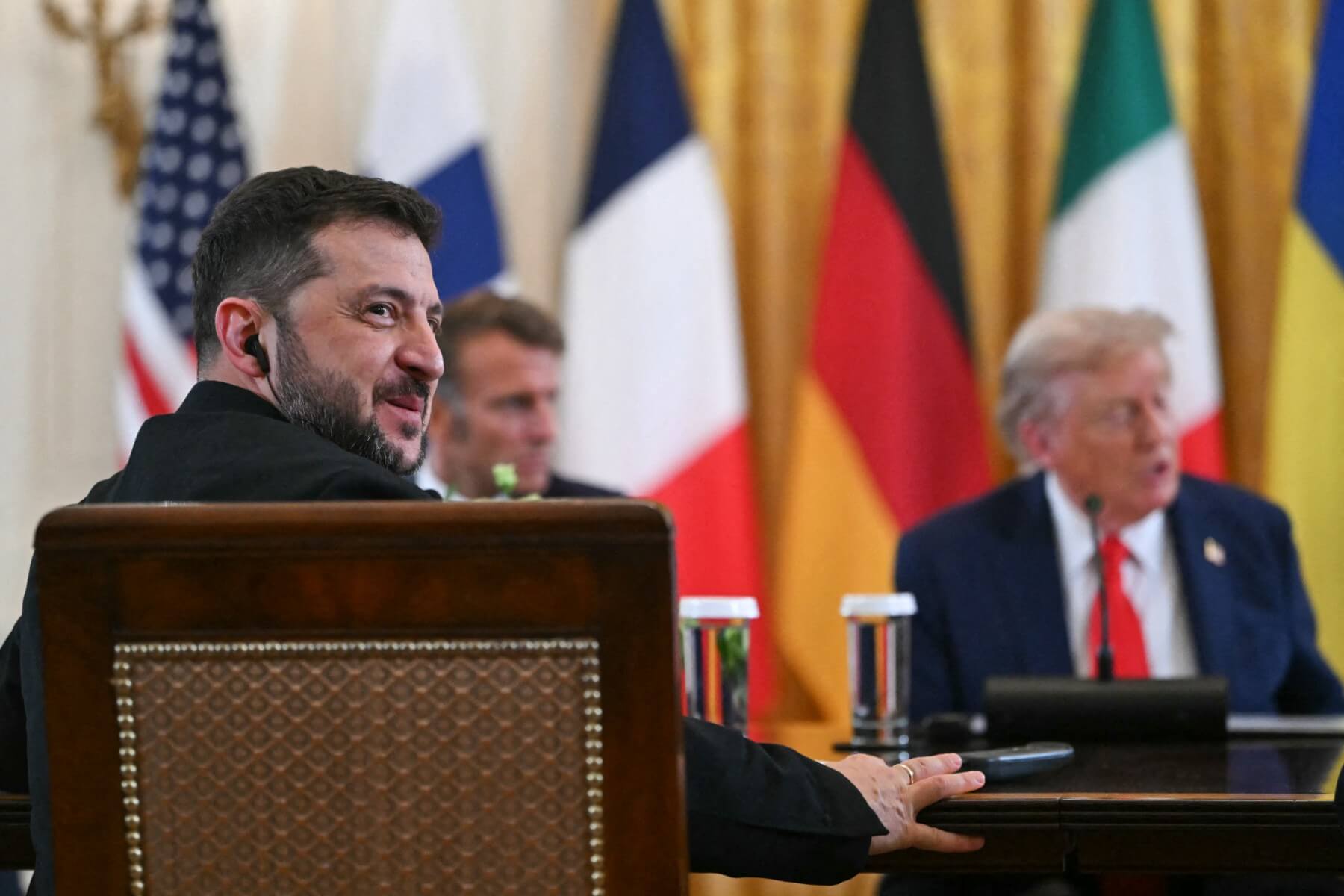
Do you remember the meeting on Ukraine between Donald Trump and European leaders in the White House in the summer of 2025? How Trump, in front of the assembled press, condescendingly introduced the heads of government and leaders of NATO and the European Commission? And how they exchanged discreet glances across the conference table, caught somewhere between nervousness and amusement? Who knows these days what might happen to you in Trump’s realm. President Zelensky, who has already found himself there without European support, knows such moments all too well.
But the images of the Europeans at the White House also tell another story: „Team Europe“ can deliver when it has to.
At last! one might be tempted to exclaim.
The Russian aggressor has united Europe. And it was a US President of all people who triggered an instinct that Europe itself had almost ceased to believe it possessed. Forced to stand on its own, Europe is rediscovering itself.
Too late, certainly. But the direction is now correct. Europeans are beginning to develop their strengths strategically and to use them more effectively on the international stage: the single market, political unity in the pursuit of peace and security in Europe, and a commitment to cooperation and the balancing of interests.
It is a wise move by the EU and Canada to elevate their relationship to an unprecedented level at this point in time. It is also a good moment to conclude new free trade agreements, such as that with India earlier this year.
In a world without order, the ability to cooperate is a hard currency. Most countries around the world have no desire to become victims of unrestrained global plundering.
Europe is the world champion of cooperation – including when it comes to failing at it, which holds important lessons
Within Europe, old divisions are currently being bridged: those with the United Kingdom following Brexit, as well as those between NATO and the EU. Strengthening unity at home is also a contribution to global stability.
Europe is late in developing its external relations. But it has some interesting things to offer: its economy, science, culture and society. Europe must now quickly learn to pursue cooperation in more unconventional and flexible ways.
Trump recognised this that day at the White House: there were ‘only’ eight Europeans sitting around the table. But they had come together as a united front. And they were backed by a Union of 450 million people and 27 member states, as well as by a transatlantic security alliance that is becoming increasingly European in character.
Without a doubt, this is a script that could take Europe a long way – provided it now continues along this path consistently.
Almut Möller is Director for European and Global Affairs and head of the Europe in the World programme at the European Policy Centre.
This opinion piece was originally published with the title “ Wo bleibt die Zuversicht, Frau Möller?“ in the German print version of Internationale Politik – Das Magazin für globales Denken, Mercator Kolleg 2026: Nachhaltige Visionen für eine inklusive und sichere Zukunft (IP Special 7/2026).