

Europe’s instinct to reaffirm its democratic values, commitment to the UN Charter, and defence of the rules-based international order is understandable – and necessary. In an age of open aggression and transactional power politics, moral clarity still matters.
But clarity alone is not enough.
The danger today is not that liberal democracy is naïve or obsolete. It is that Europe increasingly confuses the articulation of values with the exercise of power. Liberal democracy is defended as a creed, not enforced as a system – at a moment when many actors, both inside and outside the European Union, are playing by entirely different rules.
Donald Trump’s return to centre stage has only made this mismatch more visible. Alliances are treated as deals, commitments as leverage, and democracy as optional. The recent episode around Venezuela offered a similar lesson: principles, recognition, sanctions, and energy interests collided openly, and outcomes were shaped not by who spoke most convincingly about values, but by who could combine pressure, incentives, and timing. Moral positioning did not determine the result; power did.
Liberal orders assume reciprocity. They rely on shared norms, good faith, and institutional enforcement. When counterparts reject those premises outright, insistence on rules without the capacity – or willingness – to impose costs becomes a vulnerability. Openness turns into exposure. Restraint into asymmetry. The ‘good pupil’ Europe finds itself outmanoeuvred by actors who are less interested in being right than in winning.
The default response to this dilemma has been a renewed emphasis on military power. Europe must rearm – and it must. But military capability alone cannot substitute for strategy. Even if EU member states reach and exceed 2% of GDP on defence, Europe will not outgun long-established military powers on hardware alone. Nor should it try. Its comparative advantage lies elsewhere.
Power is cumulative and multidimensional. History shows that outcomes are shaped not only on battlefields, but through diplomacy, economic leverage, alliance management, endurance, and political timing. Here, Europe is far from weak. A single market of roughly 450 million people, the world’s largest trading bloc, a currency used by 20 countries, and a regulatory system that sets global standards are not moral assets – they are strategic ones. Yet they are too often deployed hesitantly, defensively, or piecemeal, rather than as part of a deliberate design.
Europe’s credibility problem runs deeper. Its moral language rings hollow when paired with long-standing complacency about its own vulnerabilities. Dependence on external energy suppliers, outsourced security guarantees, and fragile supply chains has repeatedly narrowed its room for manoeuvre. Internal democratic backsliding, selective rule-of-law enforcement, and tolerance of veto-based paralysis further erode authority. Preaching norms after neglecting the conditions that sustain them convinces neither sceptical partners abroad nor citizens at home.
This is where democracy as a system matters. Systems must be maintained, upgraded, and redesigned to remain effective. Treating democratic reform – or EU institutional reform – as an existential drama rather than a strategic necessity is itself a failure of statecraft. Reform should be understood as a form of power: a way to speed up decisions, reduce veto points, align incentives, and project credibility.
The same logic applies to enlargement. Integrating new members is not an act of generosity or moral self-expression. It is a way to expand Europe’s strategic depth, market size, and geopolitical weight – if the Union equips itself to function accordingly. A Europe that cannot decide, enforce, or act will not be strengthened by enlargement. But a Europe that reforms r to enlarge gains scale, resilience, and relevance in a contested world.
None of this requires abandoning liberal democracy. On the contrary, liberal orders survive not because they are morally superior, but because they are strategically defended. Values endure when they are embedded in power, credibility, and the capacity to shape incentives.
Europe’s task is therefore not to choose between morality and realism, but to reunite them. To match normative ambition with material capability. To turn diplomacy from a reflex into a weapon, markets from neutral spaces into sources of leverage, and internal reform into a geopolitical asset. In other words, to stop acting like the model student of a world that no longer grades behaviour – and start behaving like a political actor determined to shape outcomes.
If Europe fails to make this shift, it risks becoming eloquent but irrelevant: right in principle, yet unable to protect its interests or its values. And in a world where rules are increasingly contested, that may prove the most dangerous position of all.
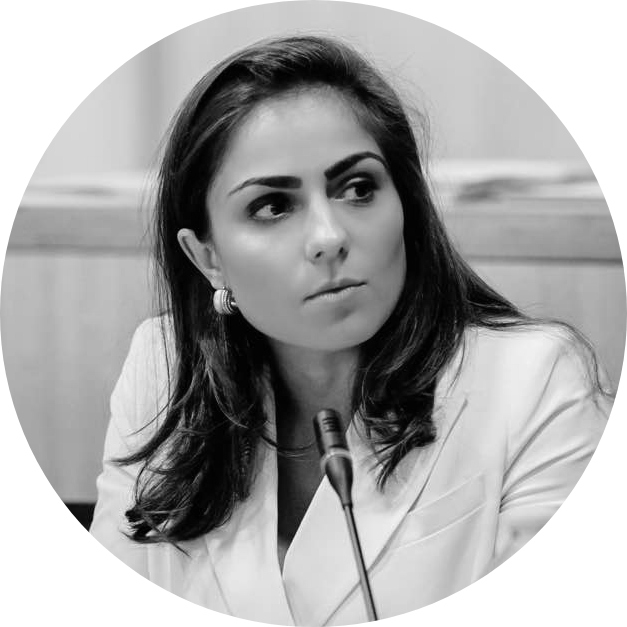
Corina Stratulat is Associate Director and Head of the European Politics and Institutions Programme.
The support the European Policy Centre receives for its ongoing operations, or specifically for its publications, does not constitute an endorsement of their contents, which reflect the views of the authors only. Supporters and partners cannot be held responsible for any use that may be made of the information contained therein.