


Safeguards and post-accession conditionality for Montenegro: from exceptional control to system integrity
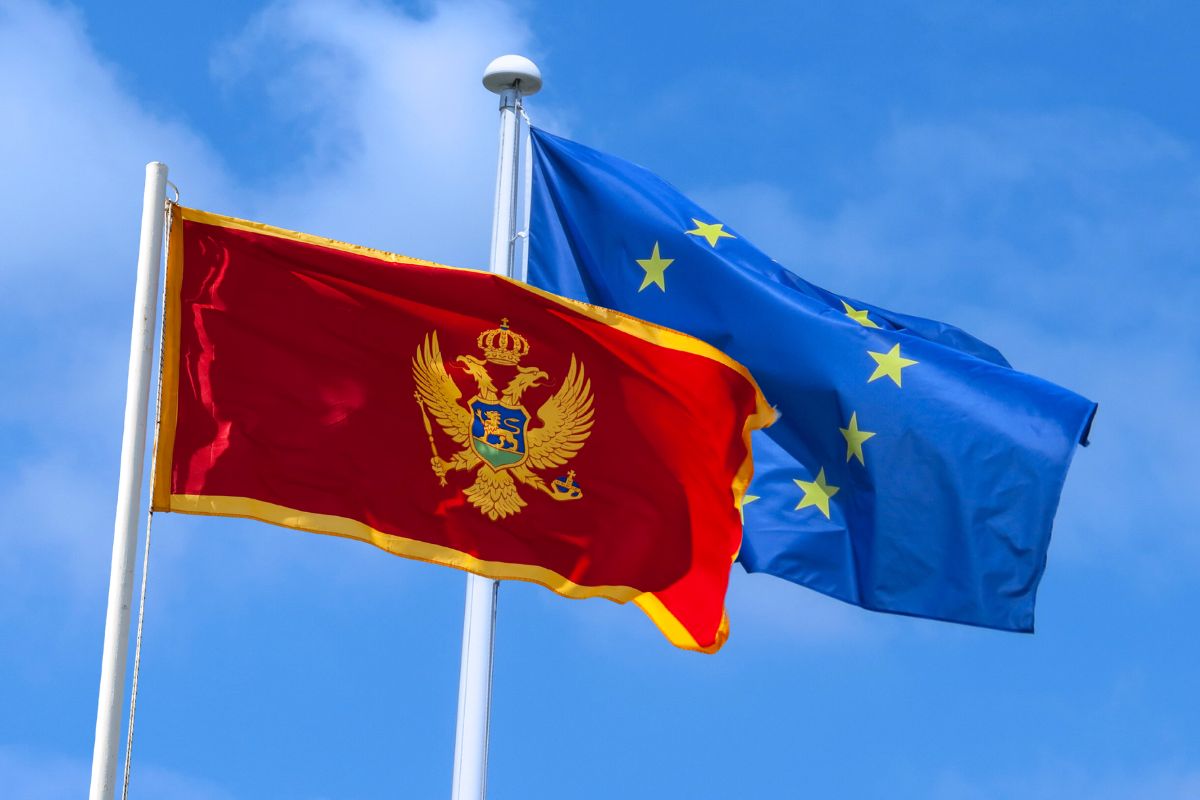

As Montenegro’s accession negotiations near completion, attention shifts from reform adoption to reform durability. The question is whether undertaken commitments will remain credible once the incentives and constraints of the accession process fade. This challenge is neither new nor unique to Montenegro. Past enlargements show that institutional independence and rule-of-law safeguards can erode after EU entry.
Developments in Hungary and Poland demonstrate how gradual institutional capture, changes to appointment systems and political pressure on oversight bodies can hollow out safeguards without formal treaty breaches, exposing the limits of ex-post enforcement tools. Recent efforts in Poland to restore judicial independence also illustrate that once institutional damage is entrenched, reversal is legally complex, politically contested and slow, even where democratic mandates for reform are clear.
Yet member states are reluctant to revive exceptional post-accession supervision regimes or open-ended political monitoring. The task is therefore to reconcile two seemingly contradictory objectives: ensuring reform durability while normalising membership. Both can be achieved through a limited, treaty-embedded safeguard design that is operationally clear, politically proportionate, targeted, institutionally anchored and time-limited.
Predictable triggers
The core design choice is predictability. Safeguards based on vague political discretion tend to be unusable or contested, whereas overly rigid mechanisms risk becoming permanent or symbolic. A more credible approach would pre-define a set of trigger conditions focused on institutional integrity rather than abstract values. These would include serious and persistent deficiencies in the independence or functioning of rule-of-law institutions, sustained failure to implement final benchmarks under Chapters 23 and 24, and institutional interference that undermines the application of Union law. By focusing on durability and re-capture risks rather than outcomes alone, such triggers reflect real backsliding dynamics and favour prevention over repair.
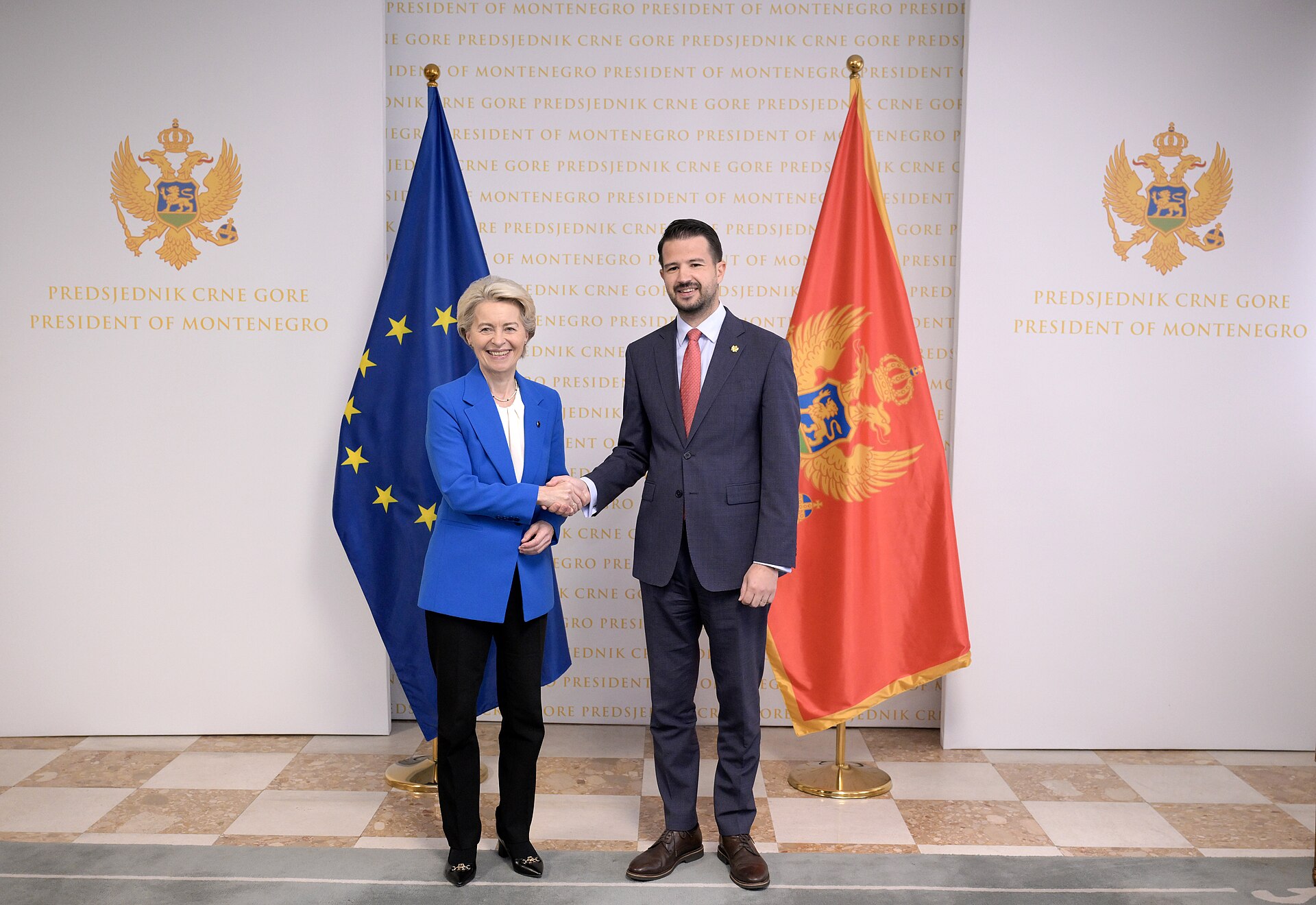 Ursula von der Leyen, President of the European Commission (left), and Montenegro President Jakov Milatović (right).
Photo by: Lukasz Kobus / © European Union, 2026
Activation without paralysis
Credibility also depends on activation. If safeguards require unanimity or an excessively high political threshold, they will remain largely symbolic. A more workable solution would introduce a reverse-logic mechanism whereby the European Commission proposes measures that enter into force unless the Council, acting by qualified majority, blocks them within a defined timeframe. This preserves political oversight while avoiding paralysis and reflects broader trends in EU governance.
Such a design also addresses concerns that enlargement may compound unanimity constraints. In practice, it is the absence of credible safeguards – not their presence – that pushes members towards veto politics after accession. When trust in reform durability erodes, unanimity becomes a substitute for enforcement. Embedding clear triggers and proportionate responses ex ante reduces incentives to use blockages ex post, channelling conflict into rules rather than vetoes. Exceptionally, member states may consider temporary arrangements to prevent misuse of unanimity in areas directly affected by safeguard activation. Safeguards are thus not a burden, but a condition for maintaining functional decision-making in a larger Union.
Targeted measures
Safeguards should not be framed as sanctions or ‘nuclear options’, which are politically difficult to deploy and risk undermining trust. Instead, the accession treaty should provide a modular menu of targeted and reversible measures tailored to specific policy areas. These could include temporary suspension of specific mutual-recognition effects, enhanced ex ante controls in procurement or state aid–sensitive sectors, conditional access to selected Union programmes or funds, or delayed entry into policy regimes already subject to transitional arrangements. This enables proportional responses and avoids an all-or-nothing logic.
Institutional durability warrants attention. The greatest risks lie not in legislative reversals but in changes to appointment procedures, operational autonomy and informal political influence over key national bodies in a country. Embedding durability requirements for courts, prosecution services, anti-corruption bodies and regulators would allow safeguards to address structural interference rather than waiting for systemic failure. Rebuilding compromised institutions can take years and may generate legal uncertainty, administrative paralysis and political polarisation – costs that preventive safeguards can mitigate.
Time limits and EU instruments
Time limits are essential for legitimacy. Safeguards should apply for a defined period following accession, combined with a review clause allowing extension by qualified majority based on a Commission assessment. Post-accession monitoring should link to existing EU instruments, notably the Rule of Law Review Cycle and relevant financial conditionality frameworks, ensuring symmetry with other members and avoiding parallel regimes.
Unlike past post-accession supervision mechanisms, such as the Cooperation and Verification Mechanism (CVM), this approach avoids parallel structures, indefinite discretion and implicit member hierarchies. It embeds targeted safeguards into the accession treaty with clear triggers, proportionate measures and a built-in sunset. Its purpose is to secure completed reforms and normalise risk management.
Well-designed safeguards are not obstacles to enlargement but conditions for its credibility. Moving from exceptional control to system integrity protects the Union’s legal order and the legitimacy of Montenegro’s accession as an equal member. By locking in reforms and bolstering investor and public confidence, enlargement and rule-of-law integrity can advance together.
Corina Stratulat is Associate Director and Head of the European Politics and Institutions Programme.
The support the European Policy Centre receives for its ongoing operations, or specifically for its publications, does not constitute an endorsement of their contents, which reflect the views of the authors only. Supporters and partners cannot be held responsible for any use that may be made of the information contained therein.