

The low-hanging fruits towards a Military Schengen
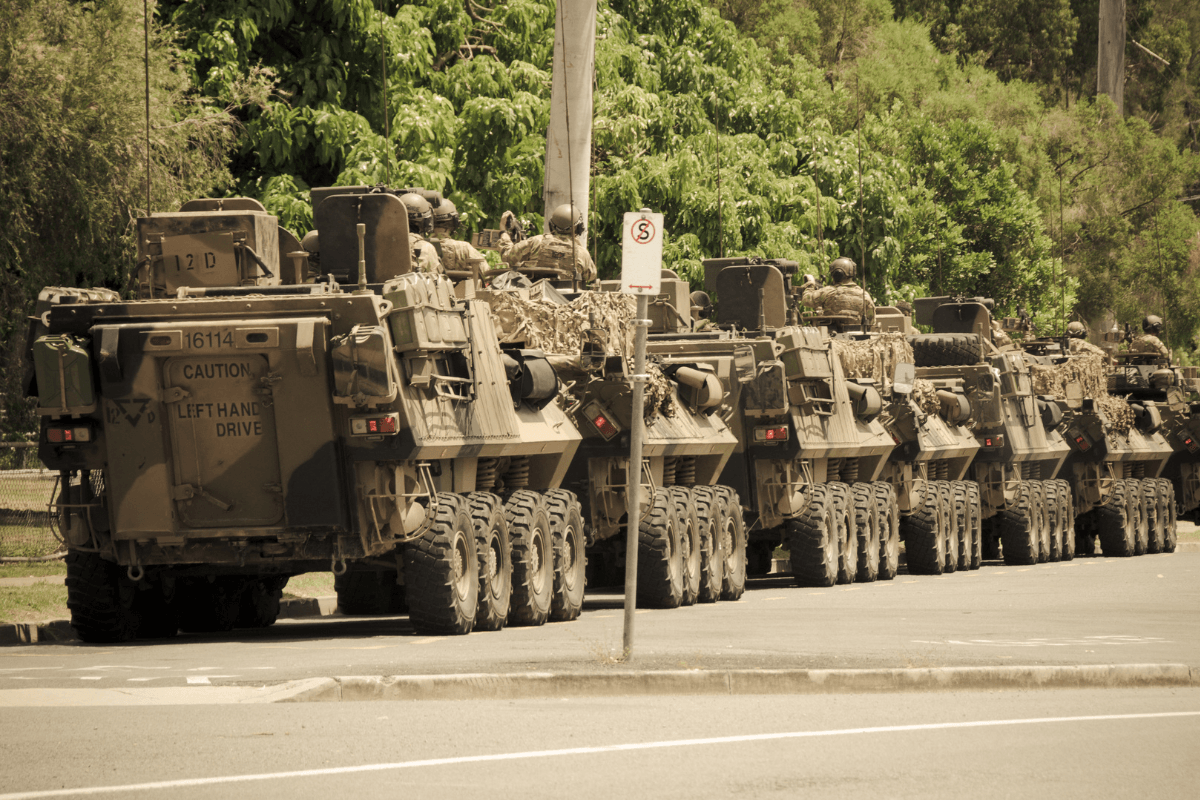



Military mobility – once overlooked and underfunded – has become a cornerstone of the EU’s defence ambitions. This shift reflects a stark reality: Russia’s full-scale invasion of Ukraine has entered its fifth year, US engagement in European security is increasingly uncertain, and the prospect of a Russian attack on NATO territory by 2029 has shifted from a hypothetical to a planning assumption.
The EU’s ambition to enable the free movement of military assets across borders at speed and scale has thus grown. Most notably, the European Commission and the High Representative published a Joint Communication on military mobility in November 2025, outlining concrete steps towards a “Military Schengen” by 2030.
The communication sets out an ambitious roadmap and addresses many long-standing concerns, including the need for less paperwork, emergency mechanisms and resilient infrastructure.
Yet ambition alone will not deliver results. The final shape and binding force of the regulation, as well as the size of associated budgets, will hinge on negotiations among member states that risk being slowed by national prerogatives and bureaucratic inertia.
Recent efforts by member states and the European Parliament to curb the Commission’s role in crisis logistics and emergency activation reflect a broader push to reassert national control and limit supranational authority.
Meaningful progress, however, does not depend on unanimous decisions among all 27 member states. The emergence of coalitions advancing practical solutions on military mobility – such as regional cooperation between Poland, Germany and the Netherlands, or corridor initiatives in the Baltic and Southern European regions – demonstrates this.
European capitals should therefore waste no time and focus on the many low-hanging fruits: measures that are politically feasible, technically straightforward and operationally consequential.
First, member states should systematically identify where existing systems would fail under pressure. One effective way to do so is to task red teams to ‘attack’ European military mobility infrastructure and procedures. Red teaming is increasingly used in the private and public sectors to identify weaknesses, challenge assumptions and anticipate threats.
The most effective red teams are independent and interdisciplinary, helping to avoid groupthink and inertia. One EU country’s team of professional ‘saboteurs’ – military and civilian; logisticians, cyber security experts, and information warriors – should be invited to stress-test another’s plans to host and transit allied troops and equipment, and vice versa.
Such exercises would expose underappreciated vulnerabilities while generating new ideas for disrupting adversary force movements should deterrence fail and crisis turn into conflict.
To up the challenge – and draw on combat-tested expertise – the EU should invite Ukrainian red teams to test European systems and planning assumptions. In recent exercises, Ukrainian participants have already confronted NATO troops with formidable challenges and learning opportunities.
Second, strengthening societal resilience against sabotage and hybrid threats is imperative. Since the expulsion of Russian diplomats and intelligence officers in February 2022, the Kremlin has increasingly relied on ‘disposable agents’ – low-skilled third-country nationals recruited online – to photograph infrastructure, track supply movements or carry out low-cost attacks.
While such incidents have risen sharply across several European countries over the past three years, they declined markedly in Ukraine in 2025 following public awareness campaigns and stricter penalties. Kyiv also established effective reporting channels, receiving more than 5,000 submissions that year. Such lessons remain underused and fragmented across member states. Germany, for instance, lacks a single point of contact to report suspicious activity.
Establishing clear, centralised reporting channels and sustained public awareness campaigns would be a low-cost, high-impact step. National intelligence services are well placed to manage such channels, while interior ministries should lead public outreach.
Finally, military mobility cannot function without the private sector. From logistics providers to construction firms, port operators and railway companies, private actors are indispensable to moving military assets across Europe. Building on the implementation of the Joint Communication, member states and EU institutions should establish formats to enhance dialogue and cooperation with the private sector. Public-private working groups could engage relevant actors, build trust and ensure a steady flow of information on the implementation of military mobility policies and industry requirements.
Access to specific non-operational data – much of which currently remains classified – will also be essential for effective cooperation and adequate preparation. This could be achieved through an EU-level civil–military communication framework allowing secure, tiered information-sharing, including EU Classified Information, with vetted representatives of strategically relevant private-sector actors.
These measures will not deliver a fully-fledged Military Schengen on their own. But they would produce immediate, tangible gains while strengthening the trust, cooperation and operational awareness needed to accelerate more ambitious reforms and infrastructure projects.
At a time when Europe can ill afford delay, focusing on pragmatic steps is not a second-best option – it is the most credible path to ensuring that forces can move swiftly and securely when it matters most.
Jannik Hartmann is a Non-Resident Associate Fellow at NATO Defence College (NDC).
Rafael Loss is a Policy Fellow at the European Council on Foreign Relations (ECFR)
Mihai Chihaia is a Policy Analyst at the European Policy Centre (EPC).
The views expressed reflect the personal opinions of the authors and not those of their institutions.
The support the European Policy Centre receives for its ongoing operations, or specifically for its publications, does not constitute an endorsement of their contents, which reflect the views of the authors only. Supporters and partners cannot be held responsible for any use that may be made of the information contained therein.