


Icelandic EU ambitions: half-in, but still reluctant to join
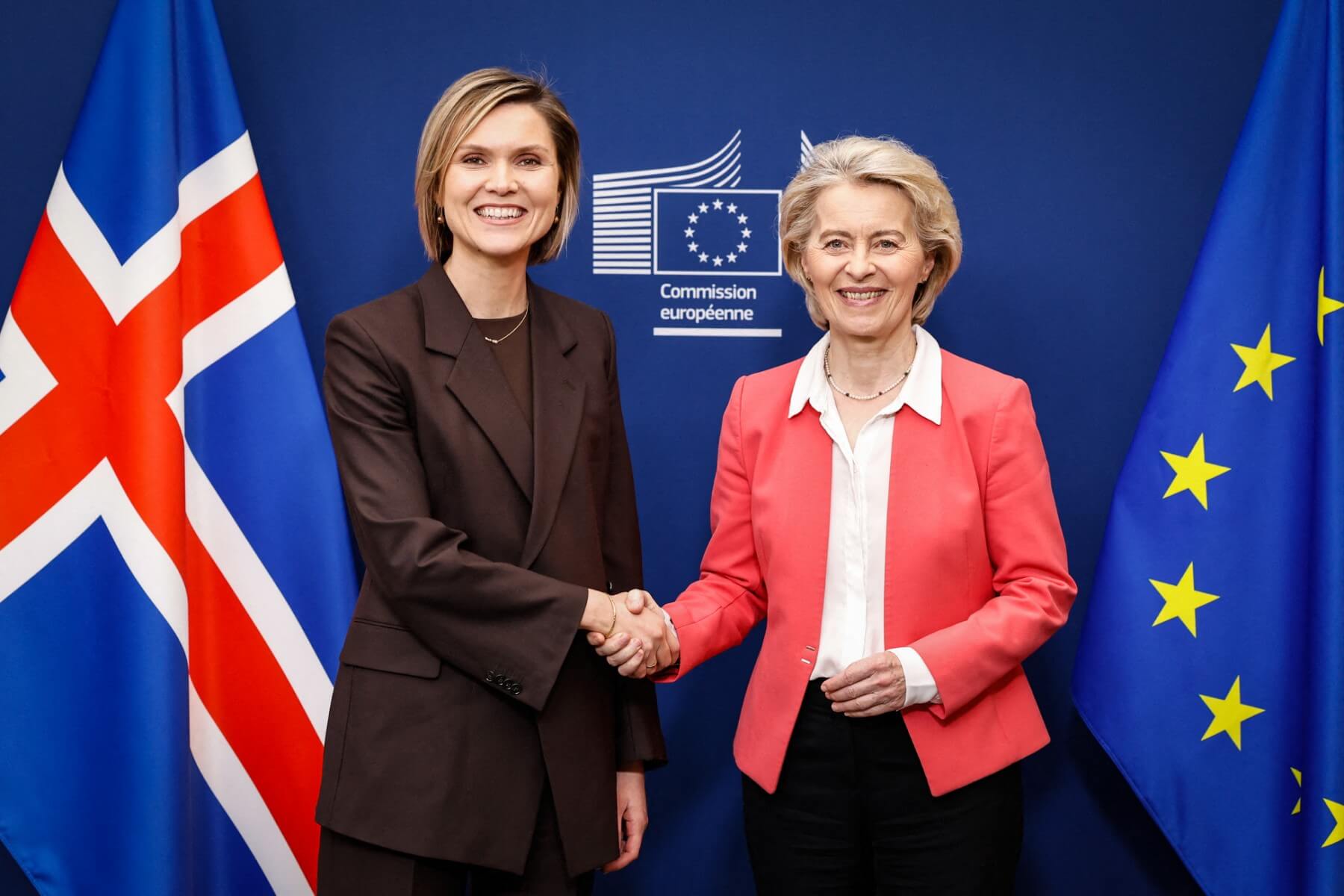

Iceland will hold a referendum on 29 August 2026 on whether to resume negotiations with the European Union (EU) on membership. The resurgence of great-power competition in the strategically important North Atlantic has created an increasingly uncertain and unstable environment in which smaller states feel particularly affected. NATO and the EU have generally provided important strategic shelters for smaller states. While traditionally the EU’s primary role has been strongest in economic security, it is also becoming increasingly significant in geopolitics and security matters.
Iceland has been a member of NATO since 1949, but does not have an army. Therefore, external security guarantees and close defence cooperation with its allies are key. Yet, Iceland, for various historic reasons, has so far remained outside the EU. Having only been fully independent since 1944, the fear of losing sovereignty and influence as a smaller nation, particularly over the key fisheries sector, has driven reluctance towards membership. But at the same time, Iceland is closely aligned with Brussels through the European Economic Area (EEA), granting the country access to the EU’s single market, along with Norway and Liechtenstein.
Current geopolitical turmoil, driven by an adversarial Russia, growing doubts over an unreliable US, Washington’s plans to ‘buy’ or ‘take’ Greenland, and concerns over a potentially weakened NATO, triggered a new debate about EU membership, bringing a fresh dynamism into a politically divisive matter that had been silent for more than a decade.
Iceland’s referendum on resuming negotiations with the EU
Iceland formally applied for EU membership in 2009, under a Social-Democratic/Green coalition government, during a deep economic crisis. Formal negotiations began in 2010, initially making quick progress. These were suspended in 2013 when a conservative government returned to office, before the negotiations could discuss the sensitive issues of fisheries and agriculture. In 2015, the Icelandic government unilaterally declared an end to the already advanced negotiations, reflecting traditional conservative EU-scepticism about preserving political and economic sovereignty, especially in the fishing industry. The European Commission, since then, has adopted a different legal opinion and considers the application to still be valid, with negotiations merely on hold – a detail that has become relevant recently, given the new EU ambitions in Reykjavik.
Against this changing geopolitical backdrop, the Icelandic government, since late 2024, consisting of the Social Democratic Alliance (Samfylkingin), the Liberal Reform Party (Viðreisn) and the populist centre-left People’s Party (Flokkur fólksins), has initiated a referendum on whether to resume EU membership negotiations. Only the social democrats and the liberals are in favour of joining the EU.
The People’s Party, however, only agreed to hold the referendum on the principle that the Icelandic people should have the final say in settling the question of EU accession once and for all. Increasing direct democracy is one of the party’s main objectives.
Even some of the other EU-sceptical opposition parties seemed to support this view. When parliament approved the referendum on 28 May 2026 following contentious discussions, only eight MPs voted against, 14 (out of 63) abstained, and 34 in favour. The referendum, originally scheduled for 2027 under the coalition agreement, will instead take place as early as 29 August 2026, reflecting the increasing political urgency of the issue amid heightened geopolitical tensions.
The country now faces an acute need to clarify its position and safeguard its own destiny rather than see its strategic room for manoeuvre increasingly constrained by larger powers. Prime Minister Kristrún Frostadóttir emphasised that resuming negotiations was about securing Iceland’s integration into Europe. Two major factors initially drove the debate on resuming negotiations: economic and monetary policies and security. Amid significant volatility in the Icelandic króna, joining the EU and the Eurozone could mitigate the challenges a small open economy faces, which is exposed to global economic developments, including high living costs. Memories of the severe financial crisis of 2008-9, when many Icelanders lost everything, remain vivid.
Furthermore, uncertainty over US President Donald Trump’s commitment to Iceland’s security and his claims over Greenland, prompted the country to turn to Europe. According to Foreign Minister Þorgerður Katrín Gunnarsdóttir, closer cooperation with the EU in security and defence could strengthen Iceland’s resilience and its strategic options. However, as the referendum campaign progressed, security played a smaller role than expected, with the focus increasingly being on domestic issues, particularly the economy, sovereignty and fisheries.
Public support
According to recent polls, 53 per cent of Icelanders would vote in favour of resuming membership negotiations, compared to 47 per cent against. With such a narrow margin, turnout could prove decisive in the referendum. Importantly, support for a referendum does not match support for actually joining the EU, with 54 per cent against and only 46 per cent in favour. Many Icelanders still adhere to traditional arguments against membership and remain unconvinced that, despite the new geopolitical and geoeconomic circumstances, joining the bloc will better serve Iceland’s interests. Some also argue that Iceland benefits from maintaining its own currency and independent monetary policies.
Fisheries are part of the DNA of Iceland’s economy and identity, and are likely again to become a stumbling block in any new negotiations. Yet, the contradiction in the polling figures between starting negotiations and joining points to a situation that many Icelanders want to see what the renewed accession negotiations offer, before they make a final decision on membership, in what would become a second referendum.
Prospects
Overall, the current debate has proved controversial in both parliament and the public, and is polarising the country. Many Icelanders fear that resuming EU membership negotiations would deepen divisions, with disagreements going through families and friendships. Therefore, entering new negotiations without broad political support and real prospects for actual EU membership is a politically risky move.
If negotiations were suspended again, whether because of difficulties in reaching a compromise on fisheries, or following a change of government after the next elections in 2028, or a second referendum rejecting EU membership, all these could harm Iceland’s credibility and future relations with the EU.
On the other hand, there are indications of the EU’s willingness to address Iceland's core concerns, especially fisheries. With the UK no longer an EU member and Iceland's economic zone not bordering any other Member States’ economic zone, there seems to be room for compromise. The European Commissioner for Enlargement, Martha Kos, welcomed the decision that the EU’s "strong and trusted partner" will conduct the referendum on resuming accession negotiations, stressing that the accession talks "always reflect the specific realities of each candidate country".
For the EU, having Iceland as a member would be an attractive move, especially given the current geopolitical environment and increasing competition with the US in the strategically important North Atlantic region. Against this backdrop, Kos argues that "creative solutions" can be found for Icelandic agriculture and fisheries that both Icelanders and EU member states can accept. The special arrangements for agriculture in the northern regions of Finland and Sweden could serve as potential precedents.
In the event of a negative referendum result, the Icelandic government will need to work with current instruments, including the EEA agreement and the bilateral agreement on security and defence and further improve them to adapt to the changing geopolitical environment, while allowing for even closer EU ties without membership. In the event of a positive result, the Reykjavik government will have to do both: Drive membership negotiations, while seeking an outcome acceptable for both sides that could persuade Icelanders to support membership in a second referendum. At the same time, it will have to maintain good and close relations with the EU under the current circumstances, and provide a basis for future relations in case of a negative second referendum.
Whatever the outcome, Iceland faces a busy and challenging time ahead, finding itself once again caught in the midst of global geopolitics and domestic tensions.
Tobias Etzold is a Senior Adviser at the European Policy Centre (EPC)
The support the European Policy Centre receives for its ongoing operations, or specifically for its publications, does not constitute an endorsement of their contents, which reflect the views of the authors only. Supporters and partners cannot be held responsible for any use that may be made of the information contained therein.

