


The EU is finally asking the right question about enlargement. It is not only what aspiring members must do to join, but what the Union itself must do to prepare for an EU30+. Yet the challenge goes further: an enlarging Union must also prepare for an era of permanent disruption.
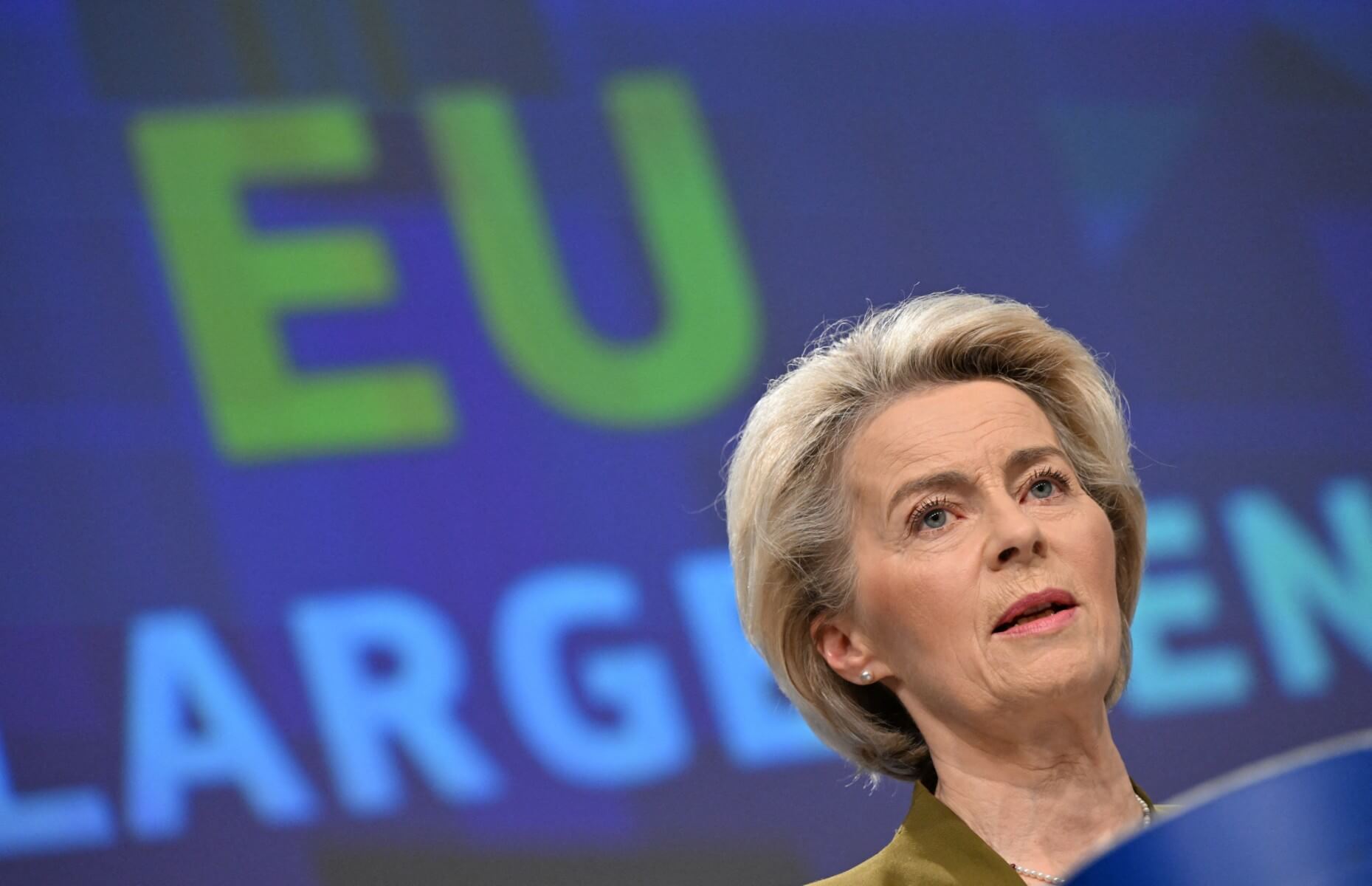
The European Commission’s new Communication on the pre-enlargement policy reviews – “Preparing for a wider Union” – is a step forward. Compared with its previous reviews (March 2024), the Commission is more concrete about internal reform, proposing greater use of the passerelle clauses and qualified-majority voting where the treaties allow, more frequent recourse of enhanced cooperation, institutional adjustments and stronger safeguards against post-accession backsliding.
This is progress: enlargement and internal EU reform are two sides of the same coin. Candidate countries must prepare for membership while the Union prepares for enlargement. But the Commission still does not go far enough.
Its approach remains firmly within the boundaries of what seems politically achievable today. It advocates making better use of the existing treaties but shies away from proposing more fundamental adaptations of the Union’s operating system. The real question is not which reforms governments are currently prepared to accept, but how an enlarged Union must renew itself in a transformed strategic environment.
Treaty change should not become an end in itself. But neither should necessary reforms be excluded because of reform fatigue. Two examples illustrate the challenge. While the Commission calls for greater use of the passerelle clauses, activating the general passerelle itself requires unanimity. Allowing its use by some form of super-qualified majority would make it a more credible instrument. Similarly, replacing the unanimity requirement under Article 7 TEU for determining a serious and persistent breach of EU values with a super-qualified majority would make the mechanism harder to block. Both reforms would require treaty change. While the Commission now explicitly supports treaty change where needed, it stops short of proposing where and how the treaties themselves should be reformed.
Greater flexibility may also be needed when not all EU countries are willing to move forward. Where treaty-based instruments such as enhanced cooperation prove insufficient, willing and able countries should be able to cooperate outside the EU framework – potentially with candidate and other non-EU countries – provided such cooperation remains compatible with the Union’s fundamental principles and open to others.
Nor is institutional reform enough. While the Commission proposes adapting the EU’s financial framework to enlargement, it lacks ambition when it comes to strengthening Europe’s common financial capacity – whether inside or outside the Union framework. An enlarged Union operating in a far more demanding strategic environment will need substantially more financial resources to provide essential European public goods – from defence and technological sovereignty to energy security and competitiveness.
These gaps point to a more fundamental problem. The reviews are primarily designed to make the EU enlargement-proof. But in an era of permanent disruption, Europe must become future- and crisis-proof as well.
Russia’s war against Ukraine, the weakening of the rules-based international order, intensifying geopolitical and geoeconomic competition, technological disruption, hybrid threats and pressure on liberal democracy expose a widening gap between what Europeans need the EU to deliver and what its current structures allow it to do. Too often, new initiatives create a progress illusion: the impression of movement without sufficient improvement in EUrope’s structural capacity to deliver.
The temptation to avoid another difficult institutional debate is understandable. But avoiding the debate will not make the delivery gap disappear. Persistent underdelivery risks undermining trust in European cooperation – and in the liberal democratic political forces that have shaped it. That is why those forces need to do more than defend what has been achieved. They need to offer a credible alternative to the status quo. Otherwise, anti-European and illiberal forces will be able to promote their vision more forcefully: shifting power back to national capitals and hollowing out the EU from within.
Europeans themselves want greater collective European action. According to the latest Eurobarometer, 90% want EU member states to be more united in confronting global challenges and 73% want the Union to have more means to do so. Three quarters see the EU as a place of stability in a troubled world.
Commission President Ursula von der Leyen’s proposal in her 2026 State of the Union Address for a new Congress on Europe – an initiative not mentioned in the Communication – provides an opportunity to make the case for a deeper level of European integration. But Europe needs more than another Congress on Europe. It requires a Congress for Europe: a process through which pro-European liberal democratic forces develop and debate a compelling vision of where European integration should go next.
Yet the Congress must not become another reflection exercise producing recommendations destined for the drawers of history. It should identify Europe’s strategic choices and develop concrete options for adapting the European construction to a fundamentally transformed strategic environment. To get there, a small Wise Wo|Men Group, led by an eminent chair who should subsequently steer the Congress, should prepare the ground for its work.
Bringing together political leaders, citizens, civil society, younger generations and representatives from candidate countries, the Congress should conclude with specific recommendations and credible pathways towards political decisions.
This would connect two debates that must not be conducted separately. The Commission’s reviews can help prepare the Union for more members. The Congress for Europe should address the bigger question: what kind of EUrope do we need for the new era we live in? The Commission has made a useful start. But political caution cannot substitute for strategic ambition. Making EUrope enlargement-proof is necessary. Making it future- and crisis-proof is the real test of our times.
Janis A. Emmanouilidis is Director of Studies at the EPC.
The support the European Policy Centre receives for its ongoing operations, or specifically for its publications, does not constitute an endorsement of their contents, which reflect the views of the authors only. Supporters and partners cannot be held responsible for any use that may be made of the information contained therein.