

Governing with citizens: Embedding participation in sustainable and inclusive wellbeing governance
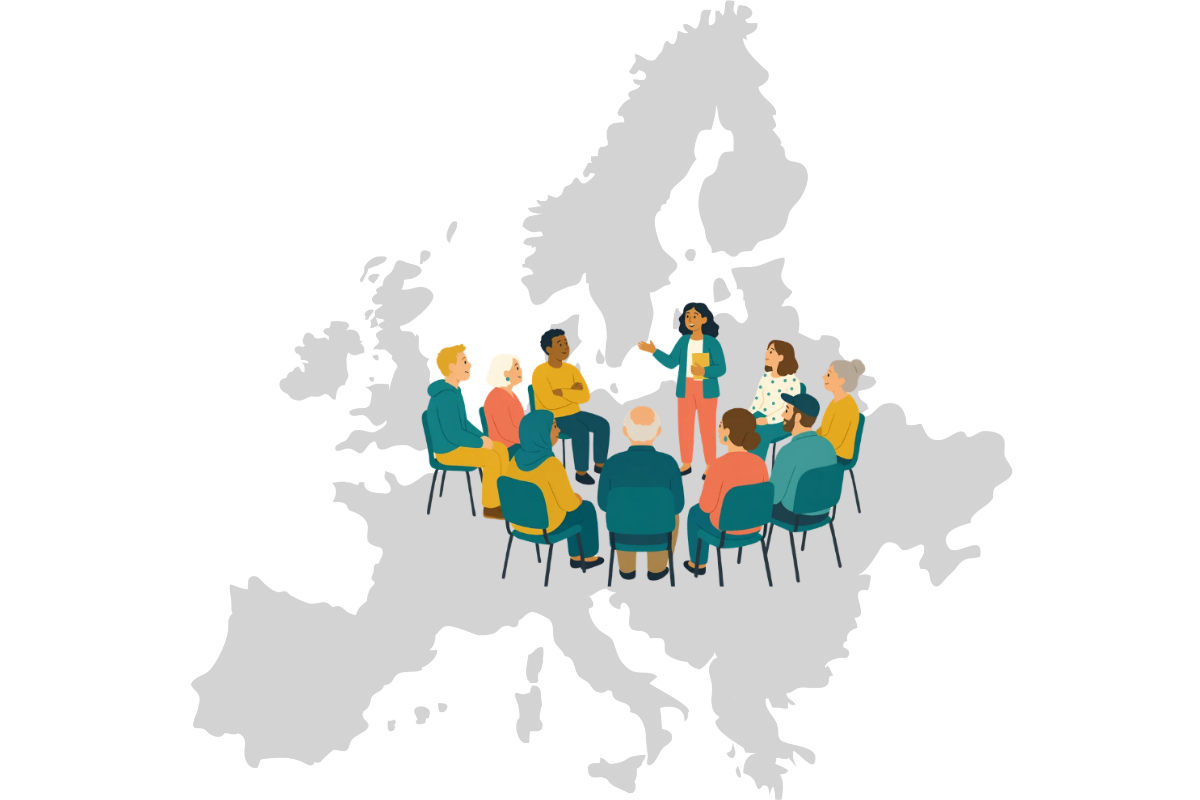


Delivering sustainable and inclusive wellbeing requires governments to move beyond traditional policymaking, to adopt holistic approaches, long-term and anticipatory policymaking, beyond GDP metrics and policy objectives, future generations commitments, and involve citizens more meaningfully in shaping public decisions. Evidence exists that participatory and deliberative approaches improve democratic legitimacy, strengthen trust in public institutions and lead to policies that better reflect citizens’ lived experiences. However, in many countries, these approaches remain temporary, disconnected from formal decision-making and dependent on political goodwill. Several experiences from across Europe demonstrate that participatory processes are most effective when they are embedded in institutional structures, supported by adequate resources and accompanied by clear follow-up mechanisms.
The brief identifies five barriers that limit meaningful participation: weak institutional and political commitment; insufficient administrative capacity; persistent inequalities in participation and representation; limited accountability and evaluation; and a democratic culture that considers participation as optional rather than integral to policymaking. To overcome these barriers, the brief recommends policymakers to:
- Institutionalise participation throughout the policy cycle
- Remove barriers to inclusive participation
- Integrate intergenerational perspectives in participatory decision-making
- Create clear follow-up, accountability, and evaluation mechanisms
- Build the capacity of public administrations to support participation
These reforms require coordinated action by EU institutions, national governments, regional and local authorities, and civil society organisations. The European Democracy Shield and the forthcoming AgoraEU programme offer a timely opportunity to embed participation as a core component of wellbeing governance.
This Policy Brief was originally published by the MERGE Project. Read the full Policy Brief on their website.
This project has received funding from the European Union’s Horizon Europe research and innovation programme under Grant Agreement no 101132524.
The support the European Policy Centre receives for its ongoing operations, or specifically for its publications, does not constitute an endorsement of their contents, which reflect the views of the authors only. Supporters and partners cannot be held responsible for any use that may be made of the information contained therein.