


Hungary changed course. What next for Europe?
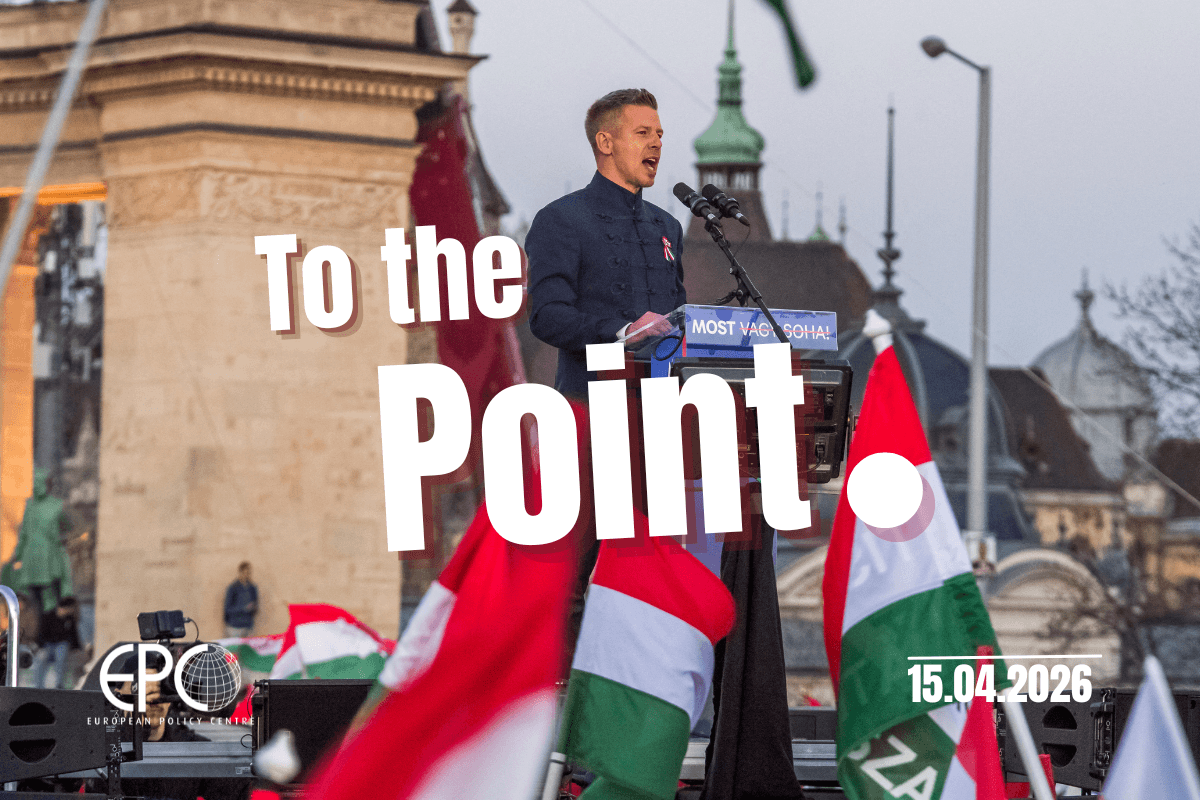

Péter Magyar and the Tisza’s party landslide victory in Hungary’s 12 April election marks a turning point for liberal democratic forces in Europe. After 16 years of Viktor Orbán’s illiberal rule, Hungarians have chosen to return to European values, the rule of law and democratic pluralism. The victory shows that illiberalism is neither inevitable nor irreversible.
But this is not the end of the illiberal challenge. The conditions that enabled illiberalism to rise in Europe and beyond remain. Illiberal forces elsewhere will study Orbán’s defeat closely, seeking strategies to avoid the same fate. The risk that these movements could consolidate or even gain power in other parts of the EU remains very real. Parties such as the Alternative for Germany (AfD) or the National Rally (RN) in France could well expand their influence in upcoming elections, and liberal democratic forces may not retain power in Poland after the 2027 elections.
At the same time, Magyar’s victory puts pressure on pro-European, liberal democratic forces across Europe. Orbán’s obstructionism gave others cover. For years, Budapest served as a convenient foil, allowing others to defend European values without advancing the more ambitious reform agenda needed to uphold them. That cover is now gone.
The task is clear: Pro-European liberal democratic actors must move beyond rhetoric and deliver a forward-looking agenda that strengthens democratic institutions, the rule of law and the enlargement agenda and produces tangible benefits for citizens. If they succeed, Hungary’s election may prove more than a national breakthrough. It could be the start of renewed liberal democratic ambition across Europe.
Janis A. Emmanouilidis is Director of Studies at the European Policy Centre.
The support the European Policy Centre receives for its ongoing operations, or specifically for its publications, does not constitute an endorsement of their contents, which reflect the views of the authors only. Supporters and partners cannot be held responsible for any use that may be made of the information contained therein.