


AI in Schengen Visa Processing: Towards a Common EU Roadmap
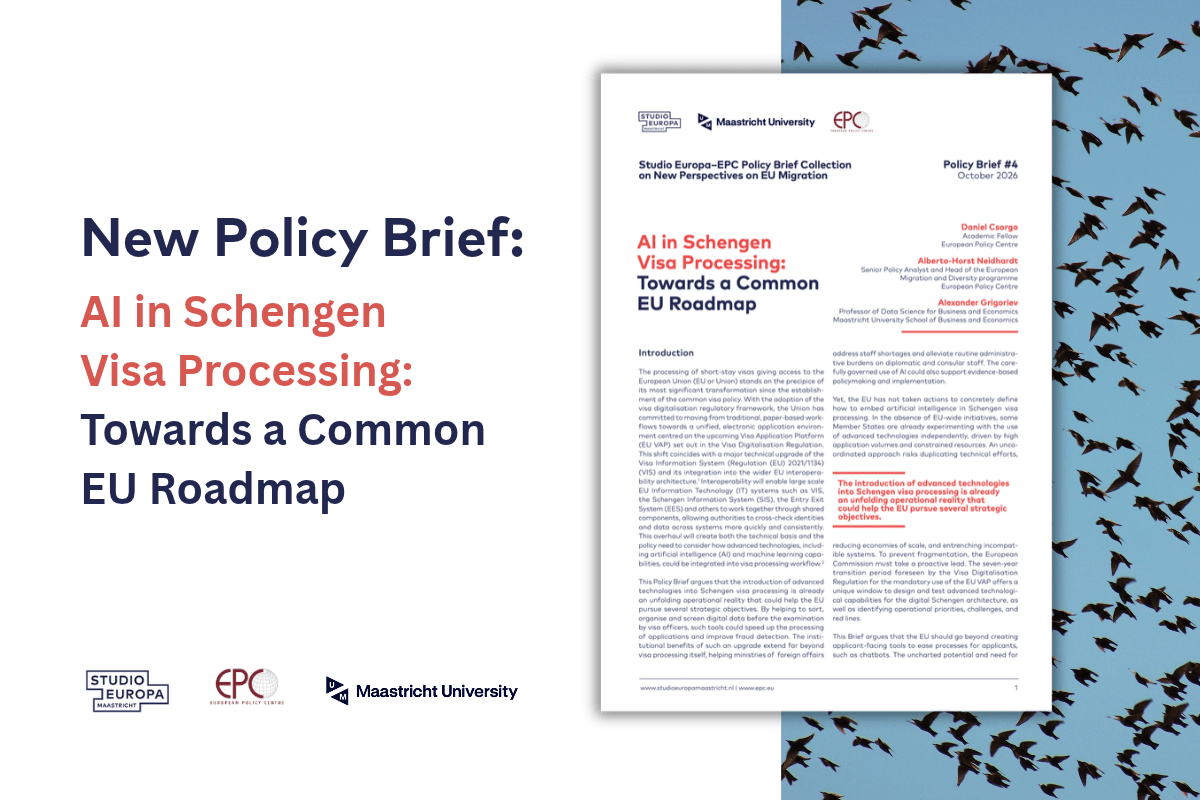


Schengen visa procedures stand on the precipice of their most significant transformation since the establishment of the common visa policy. With the adoption of the visa digitalisation regulatory framework, the Union has committed to moving from traditional, paper-based workflows towards a unified, electronic application environment.
A new EPC-Studio Europa Maastricht Policy Brief examines how artificial intelligence could help the EU achieve simpler, faster and more secure processing, in line with the EU’s 2026 Visa Strategy. While EU initiatives confirm that the integration of advanced technologies is a priority in migration management and public administration, the question of how AI could be deployed in visa processing remains unresolved.
The Policy Brief proposes a phased roadmap for integrating AI into Schengen visa processing, covering short-, medium- and longer-term developments. It argues that the use of AI could speed up the processing of Schengen visa applications, improve fraud detection and alleviate routine administrative burdens, with benefits extending beyond visa processing itself.
Main conclusions:
-
An uncoordinated approach, with initiatives left to national actors, risks duplicating technical efforts, reducing economies of scale and entrenching incompatible systems at EU level.
-
The EU should go beyond creating applicant-facing tools, such as chatbots. The uncharted potential of AI lies in back-office functions and system-to-system integration to support the examination of visa applications.
-
EU-supported pilot projects should test practical AI applications, evaluating their impact on processing times, accuracy, administrative workload and applicant accessibility.
-
The use of AI and advanced technologies invites a reflection on the role of external service providers and other intermediaries, to ensure they can continue supporting applicants while avoiding abuse in an increasingly digital system.
The greatest risk confronting the EU is not the deployment of advanced technologies and AI, but rather a failure of strategic imagination and determination to prepare for their inevitable arrival.
The support the European Policy Centre receives for its ongoing operations, or specifically for its publications, does not constitute an endorsement of their contents, which reflect the views of the authors only. Supporters and partners cannot be held responsible for any use that may be made of the information contained therein.

