Northern Europe Platform
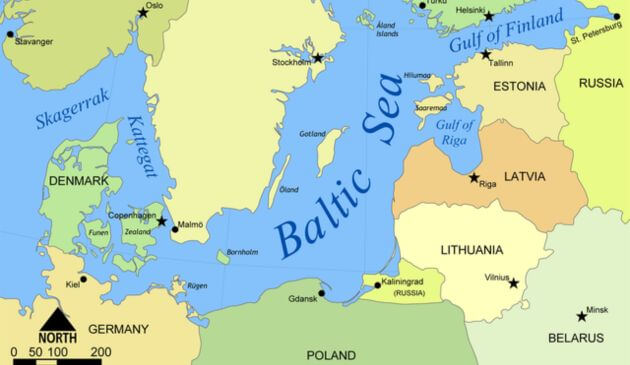
The North Sea, Baltic and Arctic area is a strategically important region for Europe and the world. It stretches from the North Sea of the United Kingdom to Germany, to Denmark, the Faroe Islands, Greenland, Iceland and wider European Arctic in connectivity also with Canada, and leading all the way to Norway, Sweden. It continues northeast through Finland, Estonia, Latvia, Lithuania, and Poland. Renowned for political stability, strong institutions, EU, EFTA and non-EU NATO memberships, the region plays a critical role in ensuring Euro-Atlantic security, boasts some the most important land and sea trade routes, competitive and innovative economies, resources, respect for environmental and marine life, high standard of living, as well as resilient, progressive and happy societies. Five Nordic countries rank among the world’s top ten happiest countries in 2024, with Finland named the happiest country for the seventh year in a row. Iceland and Denmark are among the world’s top ten safest countries in 2024. Estonia ranks first in EU’s digital public services and Lithuania is deemed one of the fastest emerging hubs for startups in Europe.
At the same time, the region is compelling from a geopolitical perspective. Despite varying sizes and GDP terms per capita, the countries share geographical proximity[6] and painful experience with Russia, which fundamentally shapes societal attitudes and the understanding of security. The region has been profoundly affected by Russia’s war of aggression against Ukraine, and fell victim to systematic hybrid attacks, which threaten regional peace and economic prosperity. However, shared threat perceptions, a deep-seated common-sense tradition, a culture of preparedness and economic decoupling from Russia allow the countries to come together and act in unison and with speed. This is strengthened by the UK who is a major security and trade player in Europe and leads Nordic Baltic cooperation on defence in the regional grouping of the Joint Expeditionary Force (JEF).
In the context of new transatlantic realities and Ukraine’s ceasefire negotiations, the region has been standing tall as a major provider of security and economic growth to Europe. Finland’s and Sweden’s NATO membership as well as the regional leaders’ forum of eight Nordic Baltic countries (NB8) is a powerful front that speaks with a common voice in the EU and NATO. The recent US shift in security, defence and tariff policies will likely force the bloc to further converge and consolidate wider European support, helping boost Europe’s strategic autonomy in such areas as defence, innovation, resources and energy independence.
Together, the North Sea, Baltic and Arctic region represent an emerging group of countries that, given the weakness of the Franco-German axis and other groupings, can lead in shaping the European agenda well beyond its own geography. The region will continue to require strong attention and fast and decisive response from NATO, the EU and its member states throughout 2025 and beyond.
EPC CONTACT POINTS
Almut Möller, almut.moeller@epc.eu
Maria Martisiute, m.martisiute@epc.eu
Concept Note