

The Multiannual Financial Framework needs financial innovation, not just more money


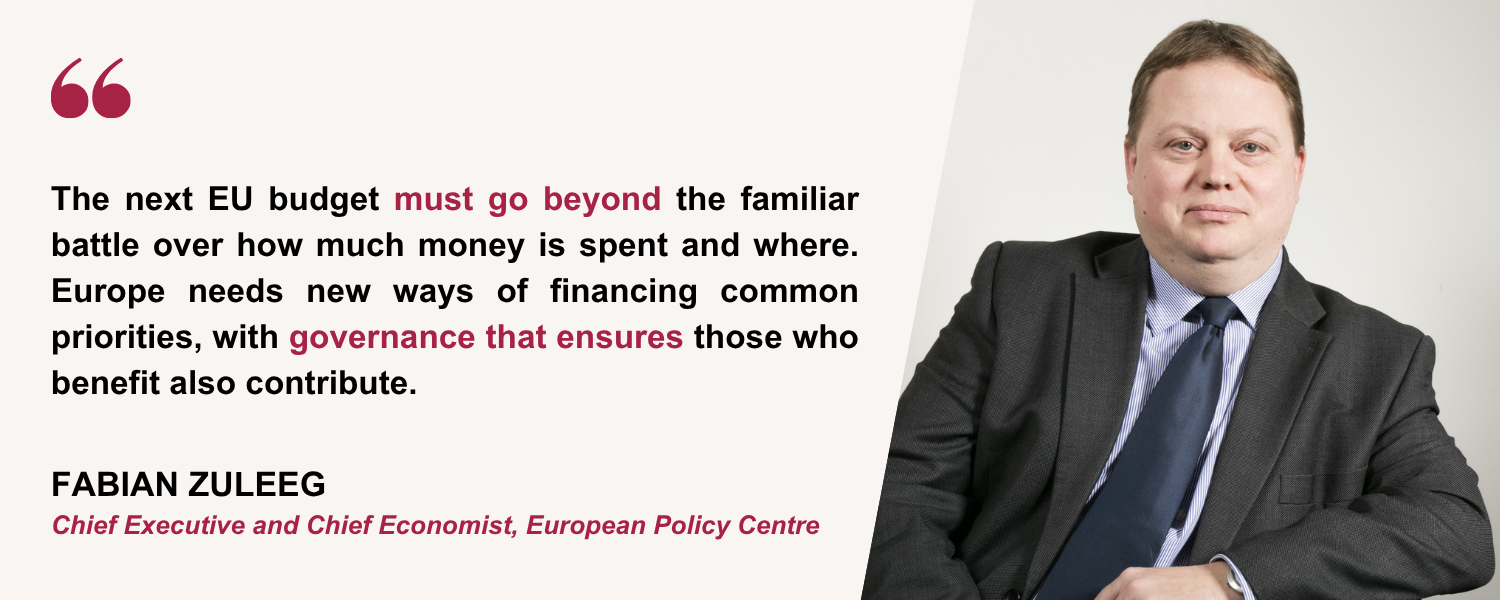
The next EU budget must go beyond the familiar battle over how much money is spent and where. Europe needs new ways of financing common priorities, with governance that ensures those who benefit also contribute.
The next Multiannual Financial Framework (MFF) is being negotiated in a radically different economic and geopolitical environment. Yet negotiations risk focusing once again on familiar questions: the size of the budget, national contributions and established spending programmes.
That is no longer enough.
Europe faces investment needs that cannot realistically be financed through national budgets alone, from defence and economic security to energy infrastructure, competitiveness and Ukraine. This requires policy and financial innovation.
Substantive new common borrowing will have to be part of the answer, especially to finance common security investments. But it should not be the only new instrument. Match funding could use limited common resources to incentivise additional national investment in genuinely European priorities. Guarantees, loans and other instruments can similarly leverage scarce public resources and mobilise private capital. The role of the European Investment Bank should be further expanded.
But financial innovation without governance innovation risks creating new opportunities for free-riding. Those unwilling to contribute cannot expect the same benefits from common investment. Access must be linked to financial participation, compliance with common rules and delivery of agreed objectives.
Ideally, this innovation would be embedded in the next MFF. But unanimity, national vetoes and established budgetary interests might make that impossible.
If so, Europe should not lower its ambition to accommodate the unwilling. Parallel instruments, including coalitions of the willing with non-EU partners where appropriate, must be created. Europe’s financing architecture must follow its strategic needs, not the other way round.
Fabian Zuleeg is the Chief Executive and Chief Economist of the European Policy Centre.
The support the European Policy Centre receives for its ongoing operations, or specifically for its publications, does not constitute an endorsement of their contents, which reflect the views of the authors only. Supporters and partners cannot be held responsible for any use that may be made of the information contained therein.