


Serbia's students won the election, now comes the EU’s test
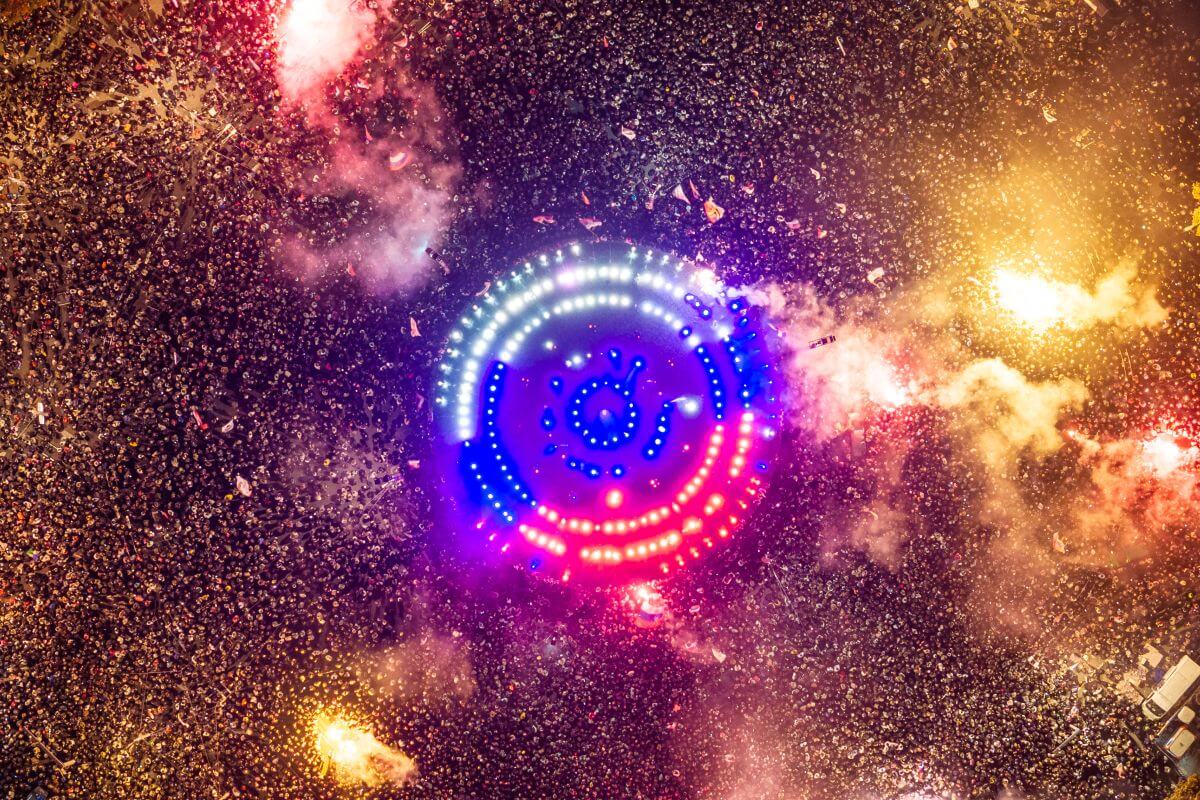

The Student List swept to victory after 14 years of rule by the Serbian Progressive Party (SNS), running on a programme focused on restoring the rule of law and democratic institutions. This opens an opportunity for revitalising Serbia’s EU path. EU engagement should prioritise reforms in the fundamentals, supporting progress towards opening Cluster 3 and meeting the interim benchmarks for Chapters 23 and 24.
The Student List won an absolute majority in the snap parliamentary elections on Sunday 25 October: 52.71% of the vote and 140 of 250 seats in the National Assembly, ahead of the party of former President Aleksandar Vučić (39.17% of the vote and 104 seats), according to preliminary results.
The high margin of victory and turnout (68.78%) made the outcome decisive, despite the deficiencies of the process and the failure of the authorities to ensure free and fair conditions. According to CRTA, the extensive network of observers deployed throughout the country largely prevented systemic manipulation at polling stations.
The campaign was marked by intimidation and repression and unbalanced media coverage. On election day, armoured vehicles blocked access to critical buildings while hooded men protected by the police gathered in Belgrade’s centre, in scenes resembling the repressive tactics employed by the SNS. They left after Vučić conceded defeat.
The Student List was the product of two years of protests since the Novi Sad train station tragedy in November 2024. Coordinated from universities, the movement demanded justice, accountability and transparency. Mobilisation became a political project focused on tackling corruption and rebuilding democratic institutions. The students deliberately avoided alignment with parties and positioning on sensitive issues to gather the broadest possible support.
Not a referendum on the EU or Russia
The election was framed exclusively in domestic terms, as a contest between the SNS and the students. Reading the results as a referendum for or against EU integration, or pro- or anti-Russia, is misleading.
For years, Vučić straddled the fence between Moscow and Brussels, cultivating close ties with Putin but also receiving support from EU leaders, who often prioritised transactional cooperation and alleged stability over democratic accountability. Describing Vučić simply as pro-Russian ignores that EU actors lent political legitimacy to the SNS regime despite the democratic deterioration.
Vučić enjoyed the support of senior EU figures, particularly from the European People’s Party (EPP), of which the SNS is still an affiliate member. In 2021, when the country was already classified as an electoral autocracy, Commission President Ursula von der Leyen praised Vučić for the progress in fundamental reforms.
The EU’s complacency towards Vučić and positions on some matters, such as the extraction of lithium, led to dissatisfaction with the EU even among traditionally pro-EU sectors, possibly strengthening the sense of domestic ownership that drove the protests from the start.
Despite the lack of explicit positioning, Serbia’s EU future was not fully absent from the programme. Students indicated their intention to obtain a positive IBAR, implying a willingness to advance Serbia’s EU path. According to data from June 2026, 75% of Student List supporters want closer EU ties.
The student movement was not free from controversy from an EU perspective. Students rejected imposing sanctions on Russia. Rather than a rapprochement with Moscow, this signals a continuation of Serbia’s contemporary foreign policy. The rise of nationalist rhetoric, especially regarding Kosovo, called the direction of the movement into question. Domestically, some criticised nationalist excesses, while others considered the rhetoric a tactic to maintain broad support after years of government propaganda.
Over a decade of state capture
The government’s media capture imposed a single narrative on sensitive issues such as the past, relations with Kosovo or foreign policy, shutting out a pluralistic debate. Anyone questioning official narratives or criticising the government risks being labelled as a traitor.
After the SNS came to power in 2012, the country entered a downward democratic spiral, moving from liberal democracy to electoral autocracy by 2014. The SNS deployed a clientelist network of patronage, established control of the security sector, tightened oversight of the judiciary and media, intensified the politicisation of public administration, and concentrated power in the figure of Vučić, blurring the links between the state, the party and the leader – leading to deep state capture.
Serbia’s EU path remains stalled. Cluster 3 on competitiveness and inclusive growth remains closed due to lack of progress in the fundamentals, despite meeting the technical criteria. Vučić long benefited from this, receiving the economic and political benefits of candidate status while avoiding the reforms required of an EU member. He presented himself as a constructive interlocutor with European leaders, while propagating anti-EU narratives domestically.
Momentum for domestic reform
Ahead lies the arduous work of translating electoral victory into lasting institutional change: dismantling the entrenched network of patronage and restoring democratic institutions without replacing one party’s control with another’s. Von der Leyen and Council President António Costa congratulated the students, and showed readiness to support necessary reforms.
Having long been perceived as complicit with Vučić, the EU needs to rebuild trust in Serbia. Besides providing technical assistance, the EU should also demonstrate symbolic support. The Commission President should visit Serbia when a government is formed.
The momentum for domestic reform shouldn’t be wasted. Foreign policy alignment and normalisation of relations with Kosovo remain membership criteria and the EU should say so from the outset, but immediately bringing these topics to the centre of EU engagement is unlikely to produce results. The re-establishment of a democratic political environment is necessary for such conversations to take place.
The EU should focus on the fundamentals, helping the country implement the 2025 country report recommendations – including appointing judges and prosecutors through merit-based procedures, reducing political interference in the judiciary and strengthening the protection of journalists. This could allow member states to validate opening Cluster 3. Advances on Chapters 23 and 24 would allow Serbia to receive a positive Interim Benchmark Assessment Report and start closing negotiating chapters. The EU should also support the fulfilment of conditions required for Reform and Growth Facility payments.
The victory of the Student List finally opens the door to domestic reform. For the EU, it is a test of whether it can support the reconstruction of institutions capable of holding any government to account.
Berta López Domènech is a Policy Analyst in the European Politics and Institutions Programme at the European Policy Centre.
The support the European Policy Centre receives for its ongoing operations, or specifically for its publications, does not constitute an endorsement of their contents, which reflect the views of the authors only. Supporters and partners cannot be held responsible for any use that may be made of the information contained therein.

