

MFF talks are missing the real point, again
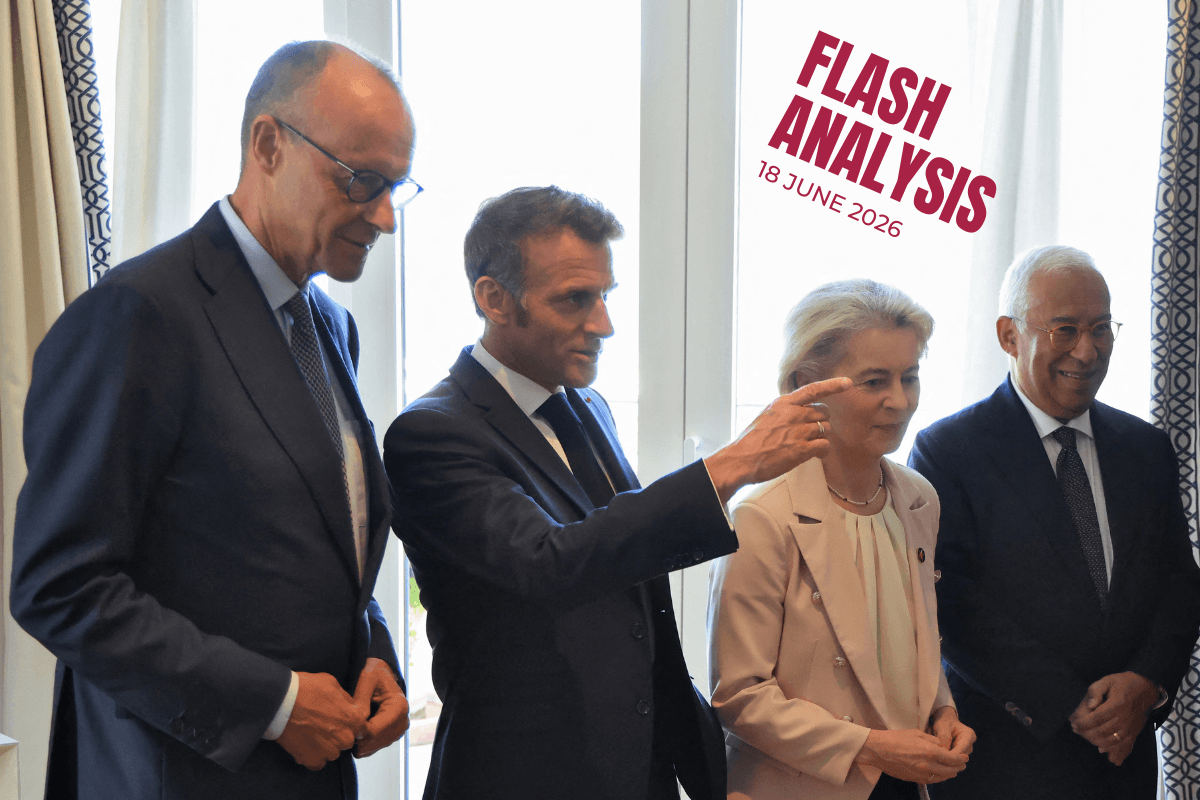

EU leaders gathering in Brussels on 18 and 19 June for the European Council will, for the first, open the so-called negotiation box for the EU’s next budget, the 2028-2034 Multiannual Financial Framework (MFF).
On the table will be the compromise proposal presented on 11 June by the Cypriot rotating presidency of the Council for a €1.73 trillion budget, including €942 billion for agriculture and cohesion, €502 billion for competitiveness and €134 billion for repaying the post-COVID-19 recovery fund. This is 2% less than what the European Commission proposed last year. Yet it remains still too high for a group of Member States led by Germany, The Netherlands and Austria, which are calling for less spending on legacy EU policies like agriculture and cohesion and more on innovation and competitiveness. On the other side of the debate, 15 Member States forming the Friends of Cohesion will defend traditional funding and resist further cuts in the MFF proposal.
This leaders’ discussion will be the first in a series that, that in the most optimistic scenario, will continue until the end of the year, in the worst case scenario, well into 2027, a year packed with national elections. As every seven years, the battle will be fought for headline figures and credit lines of a budget that represents around 1.2% of the EU’s Gross National Income (GNI).
Whatever its final size, the next MFF will be far short of addressing the massive financing needs for the green transition, digital transformation, innovation, economic security and strengthening of defence capabilities. These needs are estimated at €1,200 billion per year, nearly half of which coming from national and EU budgets.
The MFF discussion should therefore focus not only on how much will be spent, but also on how it should be spent. The central question should be the added-value of the MFF: how it can help to achieve results that Member States could not achieve alone, while reducing fragmentation and duplication across European, national and regional policies.
The MFF proposed by the Commission partly addresses this question. The budget has been redesigned to become “more strategic”, through three structural changes. First, it shifts from a programme-based budget to a policy-based budget, to better target the use of EU funding effectively; and from cost-based payments to performance-based disbursements, to maximise value for money. Second, the backbone of the budget are the National and Regional Partnership Plans (NRPPs), by which Member States will receive EU funds conditioned to the implementing reforms and investments. Third, a European Competitiveness Fund will bring together all funding related to the energy and digital transitions, health and biotech, as well as defence and space.
Will this new structure deliver greater added value and strategic planning? Both the European Parliament and the Court of Auditors doubt it. As for the Competitiveness Fund, it lacks a clear prioritisation of programmes and risks dilution of resources.
Unfortunately, once the Commission publishes its proposal, the scope for substantial changes becomes limited. Negotiations quickly shift towards the amounts involved and the balance between contributors and beneficiaries, with leaders wedded to the logic of ‘juste retour’. Discussions on the budget structure, governance and ultimately on its strategic added value become disconnected from leaders’ bargaining.
In challenging times, the budget negotiations will risk becoming yet again a missed opportunity to maximise the EU’s collective power to act.
Eric Maurice is a Policy Analyst in the European Politics and Institutions Programme at the European Policy Centre.
The support the European Policy Centre receives for its ongoing operations, or specifically for its publications, does not constitute an endorsement of their contents, which reflect the views of the authors only. Supporters and partners cannot be held responsible for any use that may be made of the information contained therein.