


Democracy in Europe is under growing strain from both internal and external forces, just as the funding landscape that sustains it is contracting. As major public and private actors redirect support, civil society is increasingly reliant the EU budget — one of the last substantial funding sources.
Yet this support is already overstretched: its core instrument, the Citizens, Equality, Rights and Values programme (CERV), already rejects up to 92% of applications due to a lack of funding, despite often ‘excellent’ quality.
Against this backdrop, on 12 November 2025 the Commission unveiled the Democracy Package, the Democracy Shield and the first dedicated EU-wide Civil Society Strategy. Its funding, however, is subject to negotiation in the next Multiannual Financial Framework (MFF).
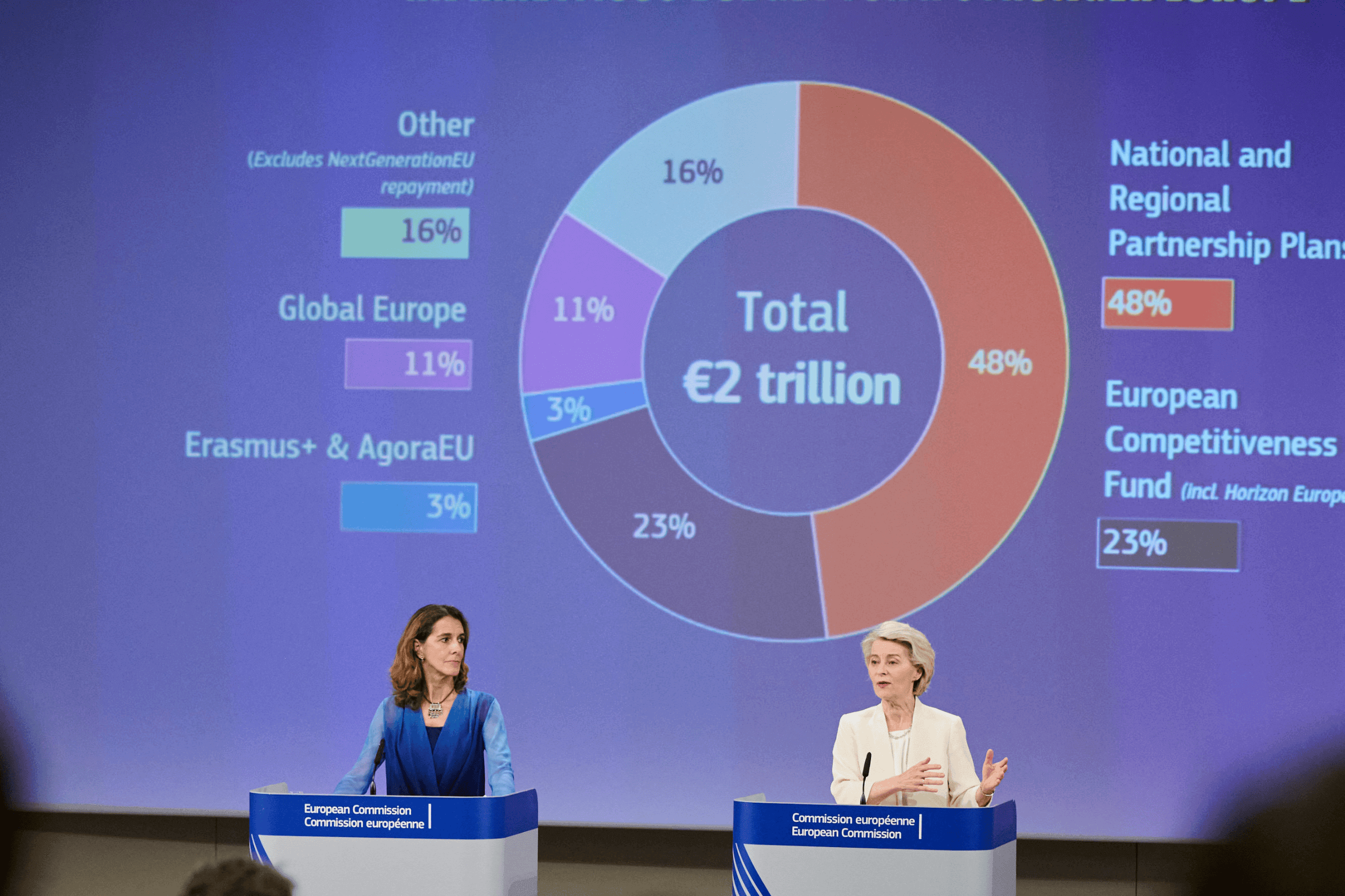
This paper examines how the EU supports democracy, and civil society in particular, within its own borders through the MFF, treating the budget as the point where political priorities are translated into funding realities. Mapping six core democracy priorities against funding streams in the current and proposed MFF, the analysis shows only a marginal increase in democracy funding, with its relative share rising by approximately 0.09%.
At the same time, the proposed architecture largely reorganises existing instruments, including merging digital programmes into a new democracy programme, AgoraEU. The absence of clear earmarking increases uncertainty for the sector, while funding priorities shift towards digital and research-related areas, in line with the Democracy Package’s focus on digital and foreign threats.
Three gaps stand out:
-
First, a predominantly defensive framing focusing on shielding democracy from disinformation, FIMI and hostile foreign actors rather than rethinking or rebuilding trust in democratic systems within member states.
-
Second, enforcement mechanisms remain weak.
-
Third, funding remains uncertain in both scale and design: the headline increase is contingent on ongoing MFF negotiations and is unlikely to compensate for the loss of other funding sources.
Closing these gaps will require action beyond the Commission, including from member states, philanthropy and civil society itself. Negotiators should look beyond headline funding tools and focus on the architecture of programmes while also exploring complementary avenues outside the MFF to sustain support for democracy.
Download the Discussion Paper here.
Liza Saris is a Project Manager and Policy Analyst at the European Policy Centre.
The support the European Policy Centre receives for its ongoing operations, or specifically for its publications, does not constitute an endorsement of their contents, which reflect the views of the author only. Supporters and partners cannot be held responsible for any use that may be made of the information contained therein.