

Europe’s Geo-Industrial Deal: A path to securing Europe’s competitiveness abroad
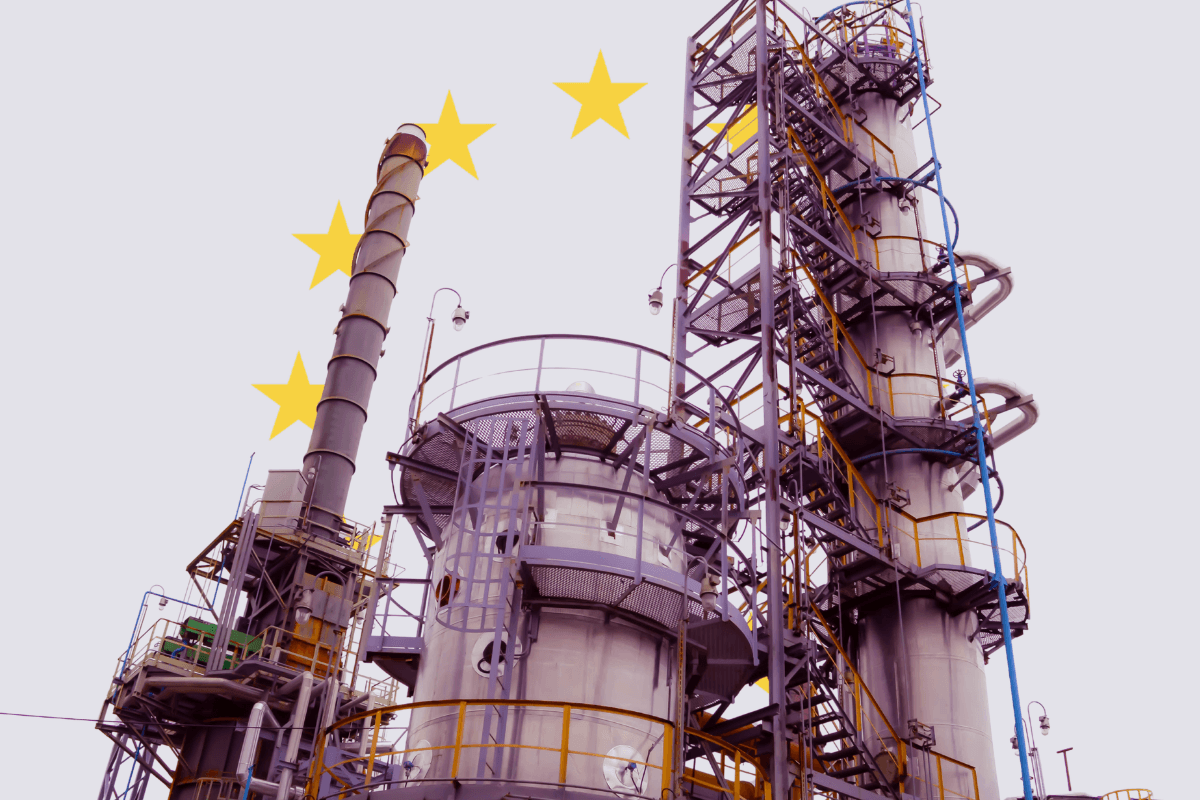

The rules-based system that has allowed Europe to thrive since the Second World War is gone. As European Commission President Ursula von der Leyen said in 2025, we are entering a “world of imperial ambitions and hostile actors. A world of transnationalism and zero-sum games. A world in which the global economy as we know it is giving way to a permanent state of flux and disorder.”
In this new global disorder, zero-sum thinking, mercantilism and nationalist economics are shaping the outlooks and actions of nations around the world. Securing a level playing field to drive growth through competitive advantages is no longer a priority. The key driver of contemporary economic policy is securing markets for domestic industries. It is not about common growth anymore; it’s about boosting business.
This trend is evident in partners and rivals alike. The 2025 US National Security Strategy signals a fundamental acceleration of this trend in the US. It will use finance, conditionalities, political leverage, and trade to aggressively back American firms building energy infrastructure, the tech industry and critical raw materials businesses — especially in the Global South and the American hemisphere. This strategy, grounded in an “America First” logic, is about energy and tech dominance and commercial influence.
China leverages subsidies, favourable financing, political packages, local content rules and more to lock in supply chains and dominate strategic sectors. Through government support and innovation, it has built massive overcapacities in numerous industrial sectors, exporting what it can’t consume domestically. These goods outcompete domestic EU firms both at home and abroad, threatening broad-scale de-industrialisation in Europe. Even friendly partners like Japan are in on the game, offering favourable export financing to select parts of its industrial base.
All three examples reflect a new geopolitical reality: global markets are no longer governed by rules-based competition, but by state-backed offers and whole-of-government support. In this new reality, the EU is struggling. The bloc is not set up to compete in this new economic order, being fundamentally based on a free trade understanding of the world.
For Europe to be able to compete abroad, a new path forward must be struck. Europe needs a Geo-Industrial Deal that brings together and coordinates existing tools for trade promotion and funding, and to plug gaps, where needed, with new tools or revisions of old ones.
Read the full Policy Brief here.
Varg Lukas Folkman is a Policy Analyst in the Europe’s Political Economy programme at the European Policy Centre (EPC).
This Policy Brief is part of the EPC’s project on the EU’s Geoindustrial Deal and the Brussels Economic Security Forum. It is the product of a dedicated roundtable held in January 2026, interviews and discussions with policymakers, industry practitioners and experts.
In the context of the workstream on economic security and Europe’s global competitiveness, the EPC is grateful for the involvement of the partners of the project, in particular the support and knowledge partnership with Siemens Energy.
A full list of partners can be found on the project’s website: https://economicsecurity.epc.eu
The author would like to thank their EPC colleagues, in particular Georg Riekeles, Ian Hernandez, Myriam Lehl, Philipp Lausberg and Jessica Moss.
The support the European Policy Centre receives for its ongoing operations, or specifically for its publications, does not constitute an endorsement of their contents, which reflect the views of the authors only. Supporters and partners cannot be held responsible for any use that may be made of the information contained therein.