

Could defence cooperation generate a spillover effect for Türkiye–EU relations?
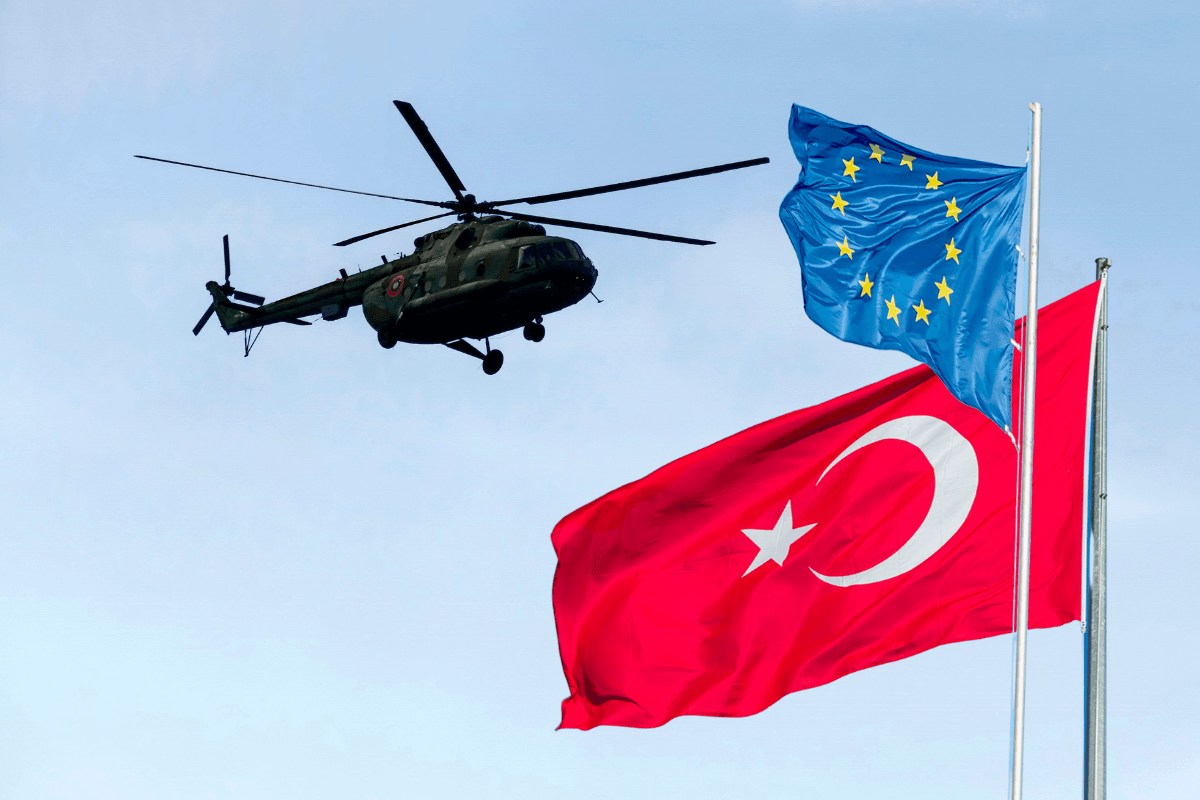

The need to strengthen Europe’s autonomous defence capabilities has become urgent. Russia’s ongoing existential threat, combined with growing uncertainty about long-term US security commitments, has forced a strategic rethink in Europe. EU member states have responded by increasing defence spending and launching new EU-level initiatives, including the ReArm Europe Plan / Readiness 2030. At the same time, cooperation with European non-EU NATO allies has intensified, most notably with the United Kingdom, Türkiye and Norway.
In this shifting landscape, Türkiye’s geopolitical relevance for the EU has grown markedly. With NATO’s second-largest army and a strategically vital geographic position, the country offers significant potential for closer cooperation. Yet that potential remains largely unrealised. Persistent political constraints continue to stand in the way.
Türkiye–EU relations are structurally complex. EU leaders increasingly describe Türkiye as a “partner”. Formally, however, the country remains an EU accession candidate – and is therefore more than just a partner. Accession talks are effectively frozen, largely due to democratic backsliding and longstanding concerns over the rule of law and fundamental freedoms.
This creates a core dilemma for the EU: how to deepen cooperation with Türkiye in critical strategic areas while accession is stalled, political divergences endure and no clear long-term vision for the relationship exists.
Since the 2015 migration crisis triggered by the Syrian civil war, relations have become increasingly transactional. This approach has delivered short-term results, but it has clear limits. It restricts strategic depth and undermines long-term sustainability. In an era of rapid geopolitical change and intensifying security competition, cooperation based on ad hoc bargaining is no longer sufficient. Trust, predictability and a minimum degree of shared values remain essential to the EU’s pursuit of strategic autonomy.
Defence cooperation lies at the heart of this challenge. More than most policy areas, it depends on long-term planning and a high level of political alignment. Türkiye’s military capabilities, expanding defence industry and willingness to contribute to a new European defence architecture are clear assets. At the same time, the political concerns outlined above remain serious obstacles.
Türkiye has signalled its ambition to play a central role in the EU’s emerging defence architecture. This includes participation in Security Action for Europe (SAFE), the EU’s new financial instrument aimed at strengthening joint capabilities and integrating defence industries. Several EU leaders have also highlighted Türkiye’s strategic importance for European defence. Yet progress has been slow. Türkiye remains excluded from SAFE, while Canada – a non-European NATO ally – has already joined.
Against this backdrop, this policy brief examines why Türkiye–EU defence cooperation is advancing more slowly than both sides would like. It explores the conditions under which cooperation could reach its full potential. It also asks whether, under more favourable political circumstances, defence cooperation could generate a spillover effect comparable to that of the European Coal and Steel Community in the 1950s – reshaping not only Türkiye–EU relations, but the broader European security landscape.
Read the full Policy Brief here.
Dr. Demir Murat Seyrek is an Adjunct Professor at VUB and the Brussels School of Governance and an Academic Fellow at the European Policy Centre.
The support the European Policy Centre receives for its ongoing operations, or specifically for its publications, does not constitute an endorsement of their contents, which reflect the views of the authors only. Supporters and partners cannot be held responsible for any use that may be made of the information contained therein.