

Back in the eye of the storm: A Trump-Putin deal would require much more to protect Ukraine and EUrope
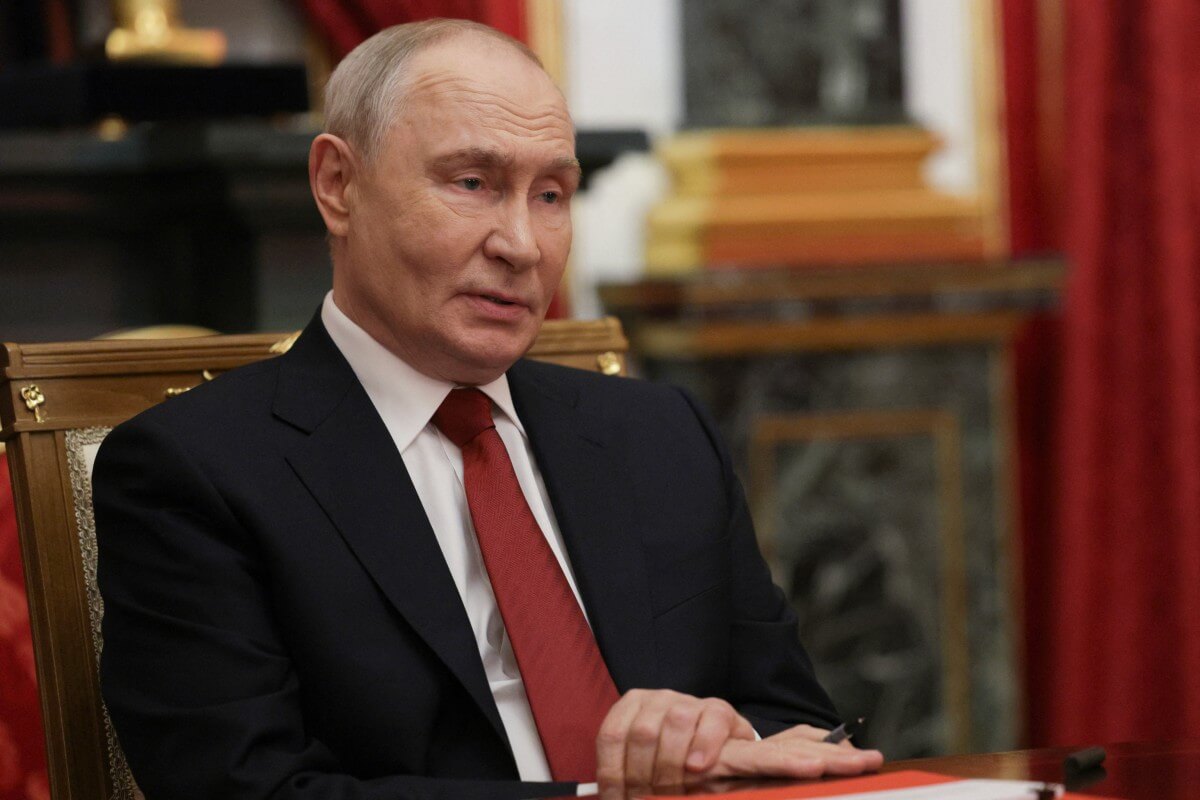
It is currently being reported that Putin, Trump and Xi Jinping will meet in November to attempt to end the conflict in Ukraine, now in its fourth year, without involving Ukrainian President Zelensky. In the light of these claims, Fabian Zuleeg revisits and updates his February 2025 exploration of Trump’s earlier ceasefire plans and finds that all his conclusions still hold: EUrope might have bought some time by appeasing Trump but we are still facing the same fundamental dilemma as we did nearly two years ago.
Peace at last?
As President-elect, Donald Trump publicly stated that he wanted to bring the war in Ukraine to an end quickly, aiming also potentially to absolve the US from its responsibility to continue to support Ukraine militarily, financially and politically. He did not succeed at the beginning of his administration, but reports suggest that he may be preparing for another try. By so imposing a ceasefire he would be ignoring that this war was started illegally by Russian aggression, that Russia committed crimes against humanity, as well as various war crimes, or that significant parts of sovereign Ukrainian territory are not only occupied by Russia but have been illegally annexed by Moscow. Making a deal and getting domestic relief for his self-inflicted high energy prices through imports from Russia are Trump’s only aims. But voices around the world believe that the most important goal is to stop the killing immediately. However, any deal must guarantee security in the longer term. If not, the conflict will return in future and is likely to escalate then.
Of course, we do not know whether Trump will be successful. Even if he makes a deal, Ukrainians might not acquiesce, given the existential nature of the threat, although it is very costly to maintain their defences without US support. It is also not clear what Putin wants; this will depend partly on the attached conditions and partly on how the war is developing with the ongoing withdrawal of US support.
Potential implications for Ukrainian and European security
The challenge for the EU and its member states will be to prepare for a working mode of managing the unreliability of Europe’s key security provider. This requires thorough “what if” preparations in Brussels and in European capitals. If Trump approaches the new potential ceasefire in his usual way, what will this mean for Ukrainian and wider European security?
In part, this will depend on the conditions attached to the ceasefire. Who will be the guarantors of any deal? Who will enforce the deal when Russia starts to disregard its provisions, as it has done in the past? Will Kyiv be given the ability to continue to build up its capabilities to resist Russian aggression? Will Ukraine become a part of the EU (now or with a credible path towards membership)? What happens to occupied territories and to sanctions on Russia?
While many in Europe and especially in Ukraine will not believe in such a ceasefire, they must try to set at least some guardrails for the conditions under which it could be agreed and regarding the role of the EU and its members in any settlement touching the very core of European security for years to come.
A ceasefire is not a lasting peace
It is important to emphasise that this is a discussion around ceasefire, not peace. Whatever is achieved now will most likely be an interlude before the next act of Russian aggression – we have been here before. Putin is unlikely to resist the temptation to pick off an already weakened Ukraine if he is not deterred from doing so. It will not be so much a frozen conflict as a temporarily paused one. Even more worryingly, Russia will, sooner or later, turn its eye to other victims. Moldova and Georgia, even the Baltic States, have long been in the firing line of Russian covert warfare and might be next in Putin’s expansionist path, in addition to continued Russian meddling in Europe, Africa and the Middle East. His continuing close alliance with North Korea links the conflict into the Asia-Pacific region.
In addition, a Russian victory would signal to the world that the only guarantor for independence and territorial integrity is nuclear weapons, leading to nuclear proliferation across the board. It would also bury any idea of upholding the UN Charter in future, creating greater insecurity by casting doubt on the independence and borders of all countries with a strong aggressive neighbour.
Putin will also not stop pursuing his stated aim to reverse some of the repercussions of the end of the Soviet Union, continuing to threaten the Baltic States, as well as the whole of NATO’s Eastern flank. With a perceived weakening of the commitment of the US to European security, the temptation to crank up the covert warfare that is already impinging on Western sovereignty will increase. While it is unlikely that he would seek a military confrontation in the short term, a continual testing of the West’s defences strongly increases the risk of a potentially catastrophic accident. In the medium term, it should not be forgotten that Putin’s Russia is expansionist by nature, seeking domination over its neighbourhood. In a few years’ time, Russia will have recovered militarily and might well surpass its pre-war capabilities in a number of areas. Eventually, the next confrontation will become inevitable.
A conditional deal
A ceasefire at this moment in time under these conditions is bad for Ukrainian and European security, as well as for global stability. Rather than resolving the situation and reducing human suffering, it vastly increases the risk of a future confrontation, with even more catastrophic outcomes. But, given the US president’s plans and objectives, it is the most likely next stage in Russia’s long-running war against free Europe.
So, what can the EU and its member states do?
While we could, and should, have done more to support Ukraine to comprehensively win the war, this has been beyond reach for some time. In the near future, it is about damage limitation. This means ensuring that any ceasefire deal contains as many favourable conditions for Ukraine as possible, including credible security guarantees. This must be done in close coordination with Kyiv. At the same time, there should be no limitations enshrined in the deal for Ukraine to arm itself or to be armed, or on any technology Ukraine needs. And Europe should be willing to put boots on the ground in case of a ceasefire; it is the only way to ensure such a ceasefire would hold.
EU membership, or a credible path and timeline to membership, should also be part of the deal, at the very least ensuring that Russia does not exercise a veto on Ukraine’s European future. However, it does not seem that this is a Trumpian priority, given his disdain for multilateral institutions in general and the EU in particular. The Union should nevertheless put this on the table, although it is unclear whether the political will within exists.
Any easing of sanctions should be contingent on the return of illegally occupied territory, as well as mandating the use of Russian funds for reconstruction, which many in the US also advocate, although there is likely to be strong pushback from Russia. Other conditions, linked to Ukraine’s Peace Formula, such as returning prisoners of war, as well as the Ukrainian children abducted by Russia, guaranteeing free passage through the Black Sea and provisions to guarantee nuclear safety all need to be part of the deal. The complete withdrawal of all 8,500 North Korean troops must also be part of any ceasefire.
Putin might not be willing to accept these conditions, but if this leads to a breakdown in negotiations between Trump and Putin, so much the better. However, chances are that in return for a favourable ceasefire, Putin will accept many conditions, even if he intends to break them later on. The challenge will be to ensure that Trump includes these conditions in his dealings with Putin. Appealing to his vanity might help: Trump always needs to win, so if the “best deal ever” is presented as being dependent on these conditions, it might induce him to push for them, i.e. his deal is “great” if, and only if, these conditions are included.
A crucial battleground for EUrope and Ukraine will be US domestic politics. Trump might be constrained in his actions, given that there are many in the US who are opposed to a US–Russia deal. This might become even more salient after the mid-term elections.
Europe will have to do more, not less, in case of a ceasefire
Much of what will need to be delivered under a ceasefire will have to come from Europe, including a commitment to a further continuous strengthening of Ukrainian armed forces and significant funding and risk guarantees for Ukrainian reconstruction. Europe must continue to further strengthen its defence industry, so that it is able to produce the weapons required to defend itself against an expansionist Russia, as well as buying more US weapons. European defence spending will need to continue to rise substantially, consistent with NATO’s June 2025 commitment to invest the equivalent of 5% of GDP in defence and security by 2035. This may entail borrowing more both at national and EU level, potentially also outside the current Multiannual Financial Framework (MFF) given the time pressure to strengthen EU capabilities in the immediate future. In many instances, Europe will be expected to sacrifice its economic interest in return for a continuation of the US security guarantee, albeit that this guarantee will be more tentative under Trump than under previous presidents.
As a result, should a Trump-imposed ceasefire become a reality, Europe will have to do – and commit – more rather than less. Europe must listen to the countries bordering Russia, and to Ukraine in particular, to apprehend the nature of Putin’s Russia and the continuous and increasing threat it poses, given the border countries’ correct assessment in the past. While conflict with Putin’s Russia is inevitable, if Europe acts it can at least hope to prevent the worst: a full-scale war with Russia.
An unjust and unstable ceasefire must clarify Europe’s responsibility. Rather than sitting back and enjoying the illusion of peace, Europe will have to prepare for further conflict to come, by supporting Ukraine, guaranteeing the deal, protecting other states in Russia’s firing line, and by substantially increasing its own military capabilities and spending. Only by recognising Putin’s threat to European security and by being ready for war can Europe hope to draw a line in the sand that Putin might not dare to cross when a ceasefire inevitably breaks down.
Fabian Zuleeg is Chief Executive and Chief Economist at the European Policy Centre.
The support the European Policy Centre receives for its ongoing operations, or specifically for its publications, does not constitute an endorsement of their contents, which reflect the views of the authors only. Supporters and partners cannot be held responsible for any use that may be made of the information contained therein.