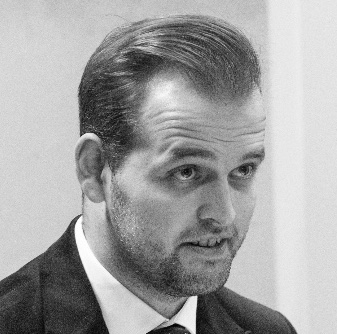
Juraj Majcin is a Policy Analyst at the European Policy Centre (EPC) in Brussels, where he leads the Centre’s European Defence and Security Projects. His work focuses on European and transatlantic security and defence policy, the mobilisation of the European defence industry, and the broader geopolitical dimensions of security.
He has been appointed a Fellow at the Institute of Advanced Studies at the University of Surrey for the 2025–2026 academic year, where he will focus on EU–UK defence cooperation.
Before joining the EPC, Juraj led the Peace, Security & Defence Summit programme at Friends of Europe. He was a 2024 James S. Denton Transatlantic Fellow at the Center for European Policy Analysis (CEPA) in Washington, D.C., and a member of the 2024 cohort of Young European Defence Leaders at the Institute for Strategic Research of the French Ministry of the Armed Forces.
He holds a BA in International Relations from the University of Geneva and an MA/LLM in International Law from the Geneva Graduate Institute.
PROGRAMME
PROJECTS
AREAS OF EXPERTISE
European and transatlantic security and defence cooperation, hybrid threats, security governance and defence industrial cooperation
EDUCATION
BA International Relations (University of Geneva)
MA/LLM in International Law Geneva Graduate Institute
"These cases have so far failed, largely because… EU law has strong primacy (over national law) within EU Member States," said Juraj Majcin, an analyst with the European Policy Centre think tank in Brussels.
"This principle has been repeatedly confirmed by the Court of Justice of the European Union."
In the absence of a coordinated EU response, individual countries may act on their own. “What Poland and the Baltic states have done – refusing to allow Fico’s aircraft to cross their airspace en route to Moscow – sends a strong signal,” Majcin said.
The parade is an opportunity for Russia to steal the spotlight internationally while also attracting "politicians from the EU to come and participate as well", he said.
“Trump wants a quick victory and the Nobel Peace Prize,” said Juraj Majcin, a policy analyst at the European Policy Centre specialising in transatlantic and European defense and security. “You can make a deal with Putin easily if you blackmail Ukraine. But will that really be a long-lasting peace? I don’t think so.”
Головним позитивом саміту у Вашингтоні є й те, що на ньому вдалося уникнути сутички між Зеленським та Трампом, подібної до тої, яка трапилася під час візиту українського президента до США в лютому, вважає політичний аналітик з питань безпеки та оборони Європейського центру політики у Брюсселі Юрай Майчин.
Avrupa, dış ve güvenlik politikasına ilişkin mevcut mekanizmasının büyük güç rekabetinin damga vurduğu bir döneme uygun olmadığını kabul etmeli ve acilen reforma gitmelidir.
The lesson of the Alaska Summit is clear: Trump is unwilling to make Moscow pay for its aggression against Ukraine, no matter how many ultimatums he issues
AA muhabiri, Alaska zirvesi öncesi Avrupa’yı hareketlendiren diplomasi trafiğini ve zirveden çıkacak olası sonuçlarla ilgili Brüksel’deki Avrupa Çalışmaları Merkezi (EPC) uzmanlarının görüşlerini aldı
Sometimes, genuine peace is only possible after military victory. Anything less risks turning a temporary truce into a prelude for an even bigger war.
Európa musí byť vo vyvíjaní tlaku na Trumpovu administratívu oveľa asertívnejšia už len preto, že ruská agresia proti Ukrajine sa dotýka európskej bezpečnosti oveľa viac než americkej.
Changes on the frontline could only happen with a “shift in international support or domestic political developments”, Juraj Majcin, an analyst at the EPC told Firepower.
A string of NATO state pledges to acquire mostly U.S. weapons to provide to Ukraine has marked a victory for President Donald Trump in his effort to strike a balance on shifting the burden of Washington's role in the war to European allies while maintaining a role in the conflict.
Kým naši spojenci sa v prípravách na hrozby zo strany Ruskej federácie posúvajú o míľové kroky vpred, slovenská vláda zaradila spiatočku.
Neutralita by pre Slovensko nebola len riskantná, ale v súčasných podmienkach aj prakticky nerealizovateľná.
Namiesto vytvárania a uprednostňovania tzv. národných šampiónov by mala Európa urobiť viac pre spoluprácu s ukrajinským obranným priemyslom, najmä s jeho startupmi.
For over 75 years, the transatlantic alliance has not only secured Europe but also advanced US interests and global influence. If the new US administration aims to counter China, Iran, and North Korea, it must prevent a Russian victory in Ukraine
The continent must act urgently to boost its defenses or face the consequences of Russia’s continued belligerence.
Obranná spolupráca v Európe sa bude čoraz viac odohrávať v rámci menších skupín štátov – takzvaných koalícií ochotných.