

Sanctions at a crossroads: developing EU leadership amid an uncertain transatlantic alliance
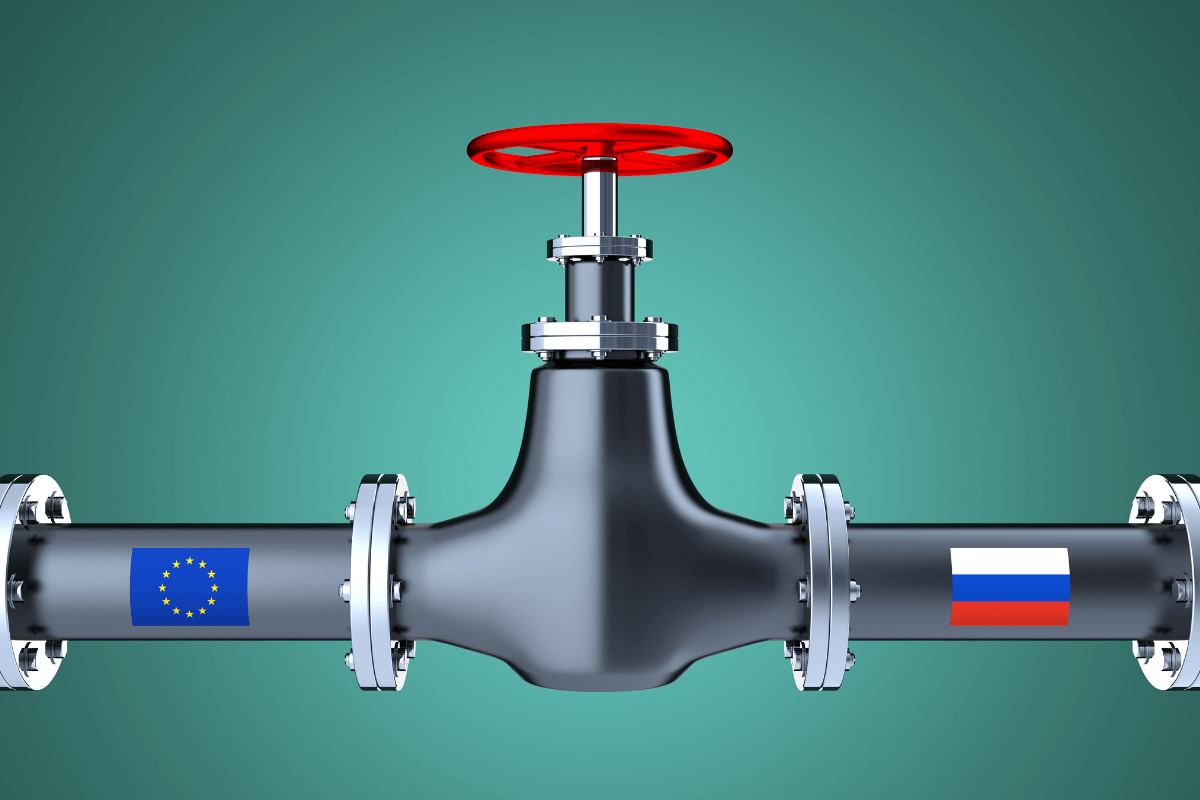


With uncertainty surrounding US sanctions in response to Russian aggression against Ukraine, the EU should enhance its sanctioning capacities to step up pressure on Moscow and defend its interests more effectively in an increasingly fragmented and confrontational world. As one of the world’s largest economic blocs with a crucial role in global trade, the EU can have significant leverage if it builds the right coalitions and further develops its sanctioning tools.
Amid swift and radical policy changes in many areas, Washington has been sending mixed signals about its use of sanctions in response to Russia’s aggression against Ukraine. So far, the Trump administration has kept two opposing options open – easing sanctions if negotiations are productive, or increasing sanctions if negotiations fail.
On the one hand, the US has been demonstrating readiness to provide concessions on sanctions, along with commercial incentives and energy cooperation with Moscow for a possible US-brokered peace agreement between Russia and Ukraine. Washington has also reduced its engagement in bodies that coordinate anti-circumvention and enforcement efforts and with international partners.
On the other hand, the US has not reduced or lifted its existing sanctions or export controls against Russia, which have been extended for a further year. Additionally, the United States allowed a key exemption to lapse in March 2025, largely ending Russian banks' ability to conduct energy transactions through US payment systems.
For the Kremlin, receiving sanctions relief is a key priority. During the US-led peace negotiations, it demanded that certain sanctions be eased as one of the preconditions for a ceasefire in Ukraine. As sanctions and ongoing fluctuations in oil prices increasingly impact the Russian economy they give the US significant leverage over Russia in peace negotiations. Despite recent threats of “bone-breaking” sanctions, Washington has so far chosen not to pursue this path, with Donald Trump opting for a more conciliatory approach toward Putin.
The US role in Western sanctions
The US is the world’s largest sanctioning authority, with Russian individuals and entities being the primary target of US sanctions for the third consecutive year. These measures have been coordinated within an international coalition, including G7 countries and other allies, in which the US has played a pivotal role, sanctioning Russia’s financial and energy sectors, military-industrial complex, and sanctions-evasion networks through third countries. The Biden administration blacklisted the lion’s share of the Russian shadow fleet, making the largest impact in identifying and inactivating those vessels and thereby helping to disrupt Russian oil exports.
Through secondary sanctions, Washington has helped enforce Western measures by blacklisting third-country entities supporting Russia, leveraging the global dominance of the US financial system and the dollar. The mere threat of US secondary sanctions has been serving as a deterrent for sanction circumvention by foreign financial institutions and entities.
What if the US withdraws?
US sanctions policy towards Russia will likely continue to be volatile and uncertain, along with the course of US-Russia relations. Moreover, a US retreat from joint allied sanctioning efforts cannot be excluded amid attempts of rapprochement between the US and Russia.
A US withdrawal implies one or several of the following:
- Less strict enforcement of current US sanctions;
- Refraining from imposing new sanctions;
- Reduced alignment with the coordinated efforts of allies on sanctioning Russia;
- Partial or total lifting of US sanctions.
Any unilateral shift in US sanctions policy would undermine the unity and effectiveness of Western sanctions and enforcement efforts. As sanctions are introduced on a rolling basis, it is important that sanctions regimes be constantly coordinated and aligned, and that implementation be monitored by international partners to close loopholes and prevent sanctions evasion and circumvention.
Mixed US signals and reduced enforcement efforts could also undermine the deterrent effect of US secondary sanctions on third countries. This can already be seen: the scaled back enforcement of sanctions against the Russian shadow fleet has already likely facilitated a rebound of Russia’s crude oil exports.
What cards does the EU hold?
As one of the world’s largest economic blocs with a crucial role in global trade, the EU holds significant sanctioning potential. Excluding secondary and financial sanctions, the EU’s 17 sanctions packages have been larger in trade volume and therefore arguably have had a more significant impact on the Russian economy than those of the US. This provides the EU with considerable leverage in potential peace negotiations, and any comprehensive sanctions relief on Russia being considered by the US would require EU cooperation. Although economic exchanges have declined sharply since 2021 when the EU was Russia’s biggest commercial partner, the EU still ranks as Russia’s third-largest trade partner.[1] EU imports of Russian mineral fuels equalled €22.3 billion in 2024 (compared to €104 billion in 2021), providing the potential to collapse Russia’s fossil fuel revenues by up to 20%. The EU also possesses significant further sanctioning potential in fields such as the nuclear energy sector, metallurgical products, and the financial industry, which could be targeted in future sanctions packages.
In addition, more than two thirds of Russia’s frozen assets, comprising €210 billion - are held in the EU (mostly at Euroclear in Belgium), representing a significant bargaining chip in any negotiations with Russia. Moreover, the Trump administration would need European consent if it planned to reconnect Russian banks to the SWIFT international payment system, which is located in Belgium and provides a potent avenue for further EU financial sanctions.
But while the EU holds considerable sanctioning potential, it currently does not match US decision-making agility, institutional capacity, and enforcement powers to prevent sanctions evasion.
Escaping the veto trap: toward a more flexible EU sanctions regime
Introducing additional measures and ensuring consistency of existing ones depends on unanimity in the Council of the EU, which has become increasingly difficult to achieve. The EU should therefore explore ways to circumvent a potential veto by dissenting member states like Hungary.
Ideally, EU unity would be maintained, for example, by increasing political pressure on potential vetoing states. Alternatively, existing and additional sanctions could be transposed into domestic law among a coalition of the willing, which could be complemented by additional like-minded third countries such as the UK and Canada. However, this approach holds the risk of non-participating states serving as loopholes of evasion within the EU, possibly requiring additional restrictions within the EU Single Market. But this would still be better if the alternative were a complete blockage of sanctions in the Council.
Another option would be to convert sanctions on Russian imports into capital controls and trade measures such as high tariffs. Tariffs are ruled by Qualified Majority Voting (QMV), denying veto power to obstructing states like Hungary.[2] The EU employed this approach in its recent imposition of tariffs on Russian and Belarusian fertilisers and agricultural goods.
New tools for better international coordination and enforcement
The EU should also develop additional tools to make its existing sanctions more effective. For example, it should adopt a more assertive communication strategy, naming and shaming EU and third-country entities who are allowing sanctions evasion. For example, an EU-level register of unverified suppliers of dual-use goods and individuals and entities suspected of sanctions circumvention could be established, modelled on the US unverified List.
To better prevent circumvention through third country actors, the EU should adopt a sticks and carrot approach. On the one hand, the EU should make proper use of the extraterritorial tools developed in the 11th, 12th and 14th packages, such as banning exports of sensitive goods to countries that re-export to Russia, and blacklisting more foreign individuals and companies that facilitate sanctions circumvention. The EU should also go further in developing secondary sanctions tools. For example, it could reinforce the existing “No-Russia” clause by imposing an obligation to include a re-export ban for sensitive items in commercial contracts of EU companies and their foreign subsidiaries with third country entities. Infringing entities should face asset freezes and exclusion from doing business with EU companies. Similar measures could be considered for entities using European technologies, raw materials, intellectual property, or investments to produce sensitive goods that are exported to Russia. [3]
On the other hand, the EU should coordinate its sanctions as much as possible with other countries. This should be done by seeking new partners for its sanctioning coalition and encouraging third countries not to undermine EU sanctions by providing concrete benefits such as more favourable trade and investment agreements, debt relief, development aid, visa facilitation, or even security guarantees – in addition to technical support in preventing sanctions evasion. Cooperation on sanctions or at least non-circumvention could be made a part of EU free trade agreements. In a world increasingly marked by coercion and the securitisation of economic relations, such an approach could become a new norm for economic cooperation among like-minded countries and beyond.
Moreover, to guarantee effective coordination of international sanctions, the EU should be ready to take the leading role in maintaining sanction coordination platforms and to push for an expansion of their competences in monitoring and auditing.
Building up resilience and sanctioning potential in the long run
To increase the EU’s sanctioning capabilities in the longer run, the EU should be ambitious in its economic security strategy, reducing dependencies and vulnerabilities in energy and critical industries and developing leverage by making others dependent on itself and reaching strategic indispensability in some areas.
The EU should also seize the opportunities arising from the declining trust in US dollar-denominated assets and push the global role of the Euro, which could significantly enhance its capacity to implement effective financial sanctions. To do so, Europeans must move ahead decisively with integrating capital markets and creating a much larger pool of European save-assets, such as Eurobonds to build trust in the Euro and increase its availability.
Many of the proposed actions will not be easy and, in some cases, might require flexible coalitions of the willing. But if the EU wants to be able to defend its interests in an increasingly confrontational world, it needs to further develop its own sanctioning capacity making it less dependent on the US.
[2] Such measures would have to be justified under the WTO rules, for example by invoking national security or market destabilisation exceptions.
[3] This could be modelled on US Foreign Direct Product Rules
Svitlana Taran is a Policy Analyst in the Europe in the World Programme at the European Policy Centre.
Philipp Lausberg is a Senior Policy Analyst in the Europe's Political Economy programme at the European Policy Centre.
The support the European Policy Center receives for its ongoing operations, or specifically for its publications, does not constitute an endorsement of their contents, which reflect the views of the authors only. Supporters and partners cannot be held responsible for any use that may be made of the information contained therein.